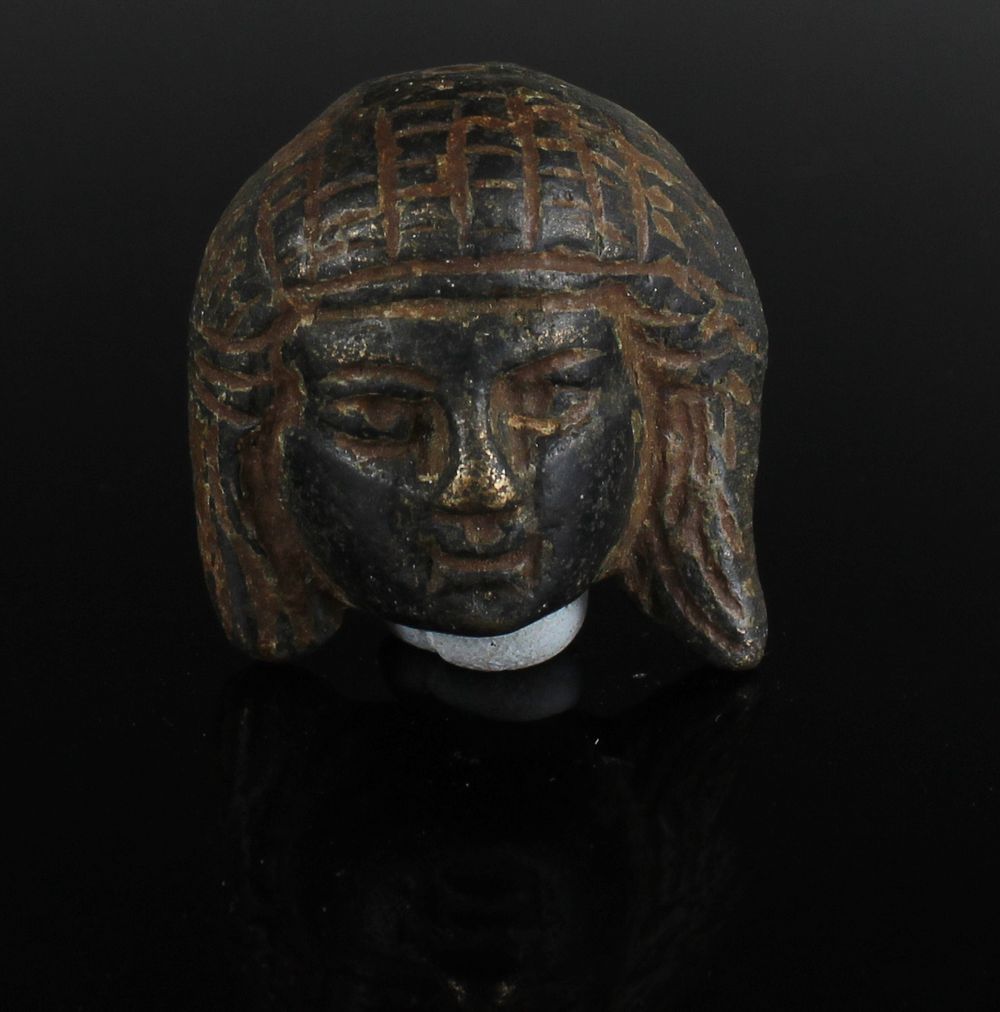
Bidspirit auction | Roman theatre mask head applique
Roman theatre mask head applique - ITEM: Theatre mask head applique MATERIAL: Bronze CULTURE: Roman PERIOD: 1st - 3rd Century A.D DIMENSIONS: 34 mm x 30 mm CONDITION: Good condition PROVENANCE: Ex English private collection, acquired before 2000s Comes with Certificate of Authenticity and Export Licence. If you are from outside the European Union, we will have to apply for the export licence again for your country, this takes 3 to 5 weeks and has a cost of 5% of the hammer price, this amount will be added to the final invoice. The Roman theater mask was an essential element in ancient Roman drama, used extensively in comedies, tragedies, and other theatrical performances. Derived from Greek traditions, these masks enabled actors to convey specific emotions and character types, often exaggerated for visibility and effect in large open-air theaters. Roman masks were made of materials like linen or wood, covered in plaster, and painted to create distinct features. The masks had exaggerated facial expressions—broad smiles or grimaces—which allowed audiences, even those seated far from the stage, to quickly recognize the mood, role, or identity of each character. The wide-open mouth of the masks served both as an amplification device for the actor's voice and as a tool to enhance facial expressions. Roman theater masks were designed to represent specific character archetypes common in Roman plays, such as the braggart soldier, the cunning slave, the young lover, or the miserly old man. Each mask type was carefully crafted to correspond to these stock characters, which were familiar to Roman audiences and helped structure the narrative of the plays. For example, masks representing comedic characters might have exaggerated smiles or frowns, while masks for tragic characters featured somber, pained expressions. This standardized design allowed actors to portray multiple roles within a single performance simply by switching masks, an important aspect of Roman theater where few actors were often cast to play many characters. The cultural significance of the theater mask extended beyond the stage, symbolizing the themes of transformation and duality in Roman society. Masks were sometimes featured in Roman art, such as frescoes, mosaics, and decorative items, where they symbolized the theater itself or were used as metaphors for deception, disguise, or the multiplicity of human experience.