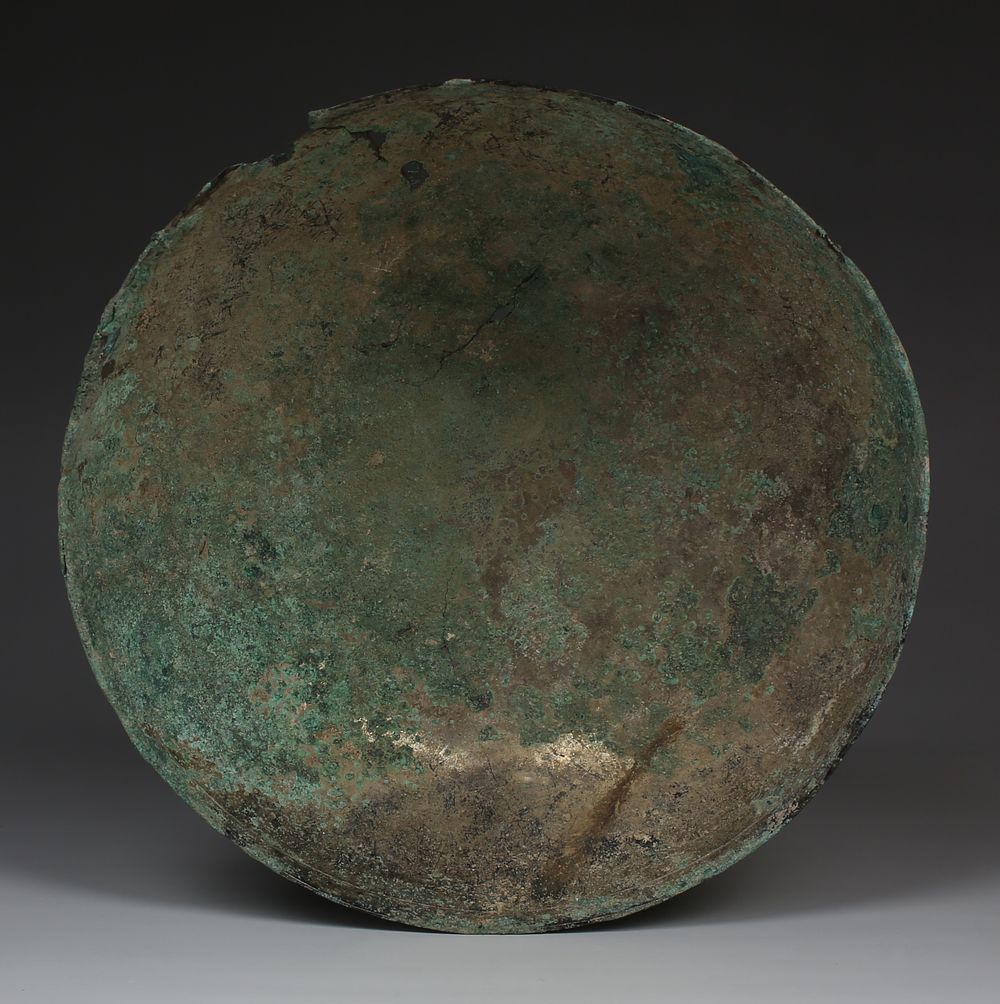
Bidspirit auction | Iron Age, Neo-Assyrian bowl
Iron Age, Neo-Assyrian bowl - ITEM: Bowl MATERIAL: Bronze CULTURE: Iron Age, Neo-Assyrian PERIOD: 9th - 7th Century B.C DIMENSIONS: 65 mm x 192 mm diameter CONDITION: Good condition, see pictures PROVENANCE: Ex English private collection, London, acquired in 1990s Comes with Certificate of Authenticity and Export Licence. If you are from outside the European Union, we will have to apply for the export licence again for your country, this takes 3 to 5 weeks and has a cost of 5% of the hammer price, this amount will be added to the final invoice. The Neo-Assyrian Empire (c. 911–609 BCE) was one of the most powerful and influential empires of the ancient Near East, known for its military prowess, administrative efficiency, and cultural achievements. The empire expanded through a series of successful military campaigns, reaching its zenith under kings like Tiglath-Pileser III, Sargon II, Sennacherib, and Ashurbanipal. The Neo-Assyrians established a centralized and well-organized state with a sophisticated bureaucracy, extensive road systems, and an innovative postal service, which helped maintain control over a vast and diverse territory stretching from the Mediterranean to the Persian Gulf. Culturally, the Neo-Assyrians were renowned for their contributions to art, architecture, and literature. They built grand palaces and temples, adorned with intricate bas-reliefs and colossal statues depicting gods, kings, and mythological creatures. These artworks often celebrated the king's military victories and divine favor, serving both as propaganda and as a testament to the empire's power. The Neo-Assyrians also preserved and expanded the literary traditions of Mesopotamia, maintaining vast libraries that housed texts on history, science, religion, and mythology. The most famous of these was the Library of Ashurbanipal in Nineveh, which contained thousands of cuneiform tablets and remains one of the most significant archaeological discoveries of the ancient world. Religion played a central role in Neo-Assyrian culture, with the king seen as the earthly representative of the gods, particularly the chief deity Ashur. The Assyrians practiced a polytheistic religion, worshiping a pantheon of gods who governed various aspects of life and the cosmos. Religious rituals, including sacrifices and divination, were integral to state affairs, and temples served as both religious and economic centers.