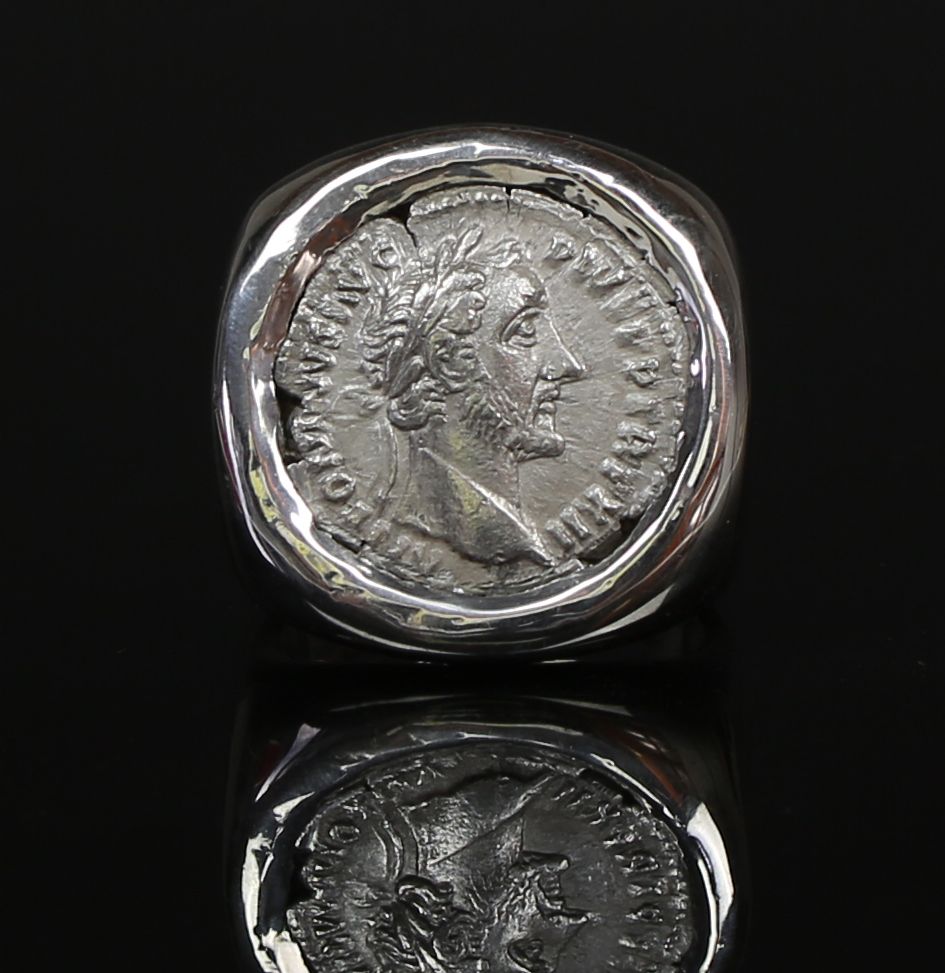
Bidspirit auction | Ring with Antoninus Pius denarius
Ring with Antoninus Pius denarius - ITEM: Ring with Antoninus Pius denarius. Obverse: ANTONINVS AVG PIVS PP TR P XII, laureate head right. Reverse: COS IIII, Felicitas standing left, holding caduceus and cornucopia. References: RSC 252, BMC 664, RIC 178 MATERIAL: Silver CULTURE: Roman PERIOD: 148 - 149 A.D DIMENSIONS: ES 16, F 56, USA 7,5 , 27,2 gr CONDITION: Good condition. Original coin within a modern handmade silver ring. PROVENANCE: Ex Spanish private collection, bought in Austrian auction house (Coin) Comes with Certificate of Authenticity and Export Licence. If you are from outside the European Union, we will have to apply for the export licence again for your country, this takes 3 to 5 weeks and has a cost of 5% of the hammer price, this amount will be added to the final invoice. Antoninus Pius, Roman Emperor from 138 to 161 CE, was one of the ”Five Good Emperors” and is remembered for his stable, prosperous, and peaceful reign. Born in Lanuvium, Italy, Antoninus was adopted by Emperor Hadrian, who saw in him a steady and principled successor. After Hadrian's death, Antoninus succeeded him and devoted his reign to maintaining the empire’s stability and administrative efficiency rather than military conquest. His rule marked a period of peace, known as the Pax Romana, where few military campaigns were launched, and the focus was instead placed on domestic development and the reinforcement of legal and administrative systems throughout the provinces. His governance style emphasized patience, moderation, and fairness, setting an example of integrity and continuity. One of Antoninus Pius's significant contributions was his attention to law and administration, particularly in the provinces, where he worked to unify and codify legal practices. He enacted several reforms that protected slaves from abuse, established fairer treatment of freedmen, and improved the rights of provincial citizens under Roman law. His commitment to justice extended to the empire’s financial health as well; Antoninus is noted for his careful management of imperial resources, which he used prudently without raising taxes or indebting the state. Under his administration, the Roman economy flourished, and public works like roads, temples, aqueducts, and theaters were developed, strengthening the infrastructure and facilitating trade and communication across the empire. Antoninus Pius's reign was marked by a notable absence of internal strife or rebellion, a testament to his diplomatic approach and administrative skills. His loyalty to traditional Roman values and his respect for the Senate helped him maintain harmony with Rome’s political elite, avoiding the conflicts that had plagued previous emperors. When Antoninus died in 161 CE, he was deeply mourned by Romans, who saw him as a model of virtuous and wise leadership. His successor, Marcus Aurelius, would go on to honor Antoninus's legacy, adopting his name as part of his title and reflecting on the qualities that made Antoninus a beloved ruler.