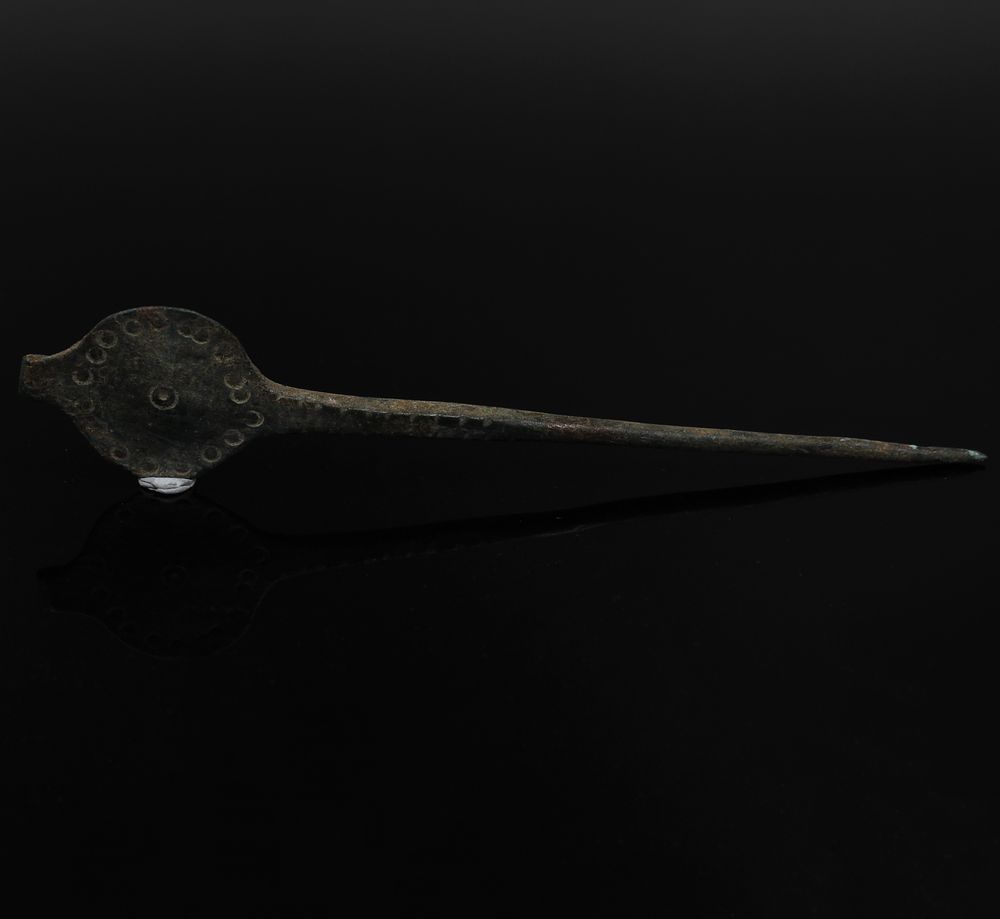
Bidspirit auction | Roman hair pin with dots
Roman hair pin with dots decoration - ITEM: Hair pin with dots decoration MATERIAL: Bronze CULTURE: Roman PERIOD: 3rd - 5th Century A.D DIMENSIONS: 117 mm x 23 mm CONDITION: Good condition PROVENANCE: Ex Dutch private collection, acquired between 1980 - 1990 Comes with Certificate of Authenticity and Export Licence. If you are from outside the European Union, we will have to apply for the export licence again for your country, this takes 3 to 5 weeks and has a cost of 5% of the hammer price, this amount will be added to the final invoice. Roman hairpins were essential items of personal adornment, often used by both men and women to secure hairstyles in place, reflecting the aesthetic and social norms of ancient Roman society. These hairpins were typically made from a variety of materials, including metal, bone, ivory, wood, and occasionally glass or precious stones. The materials used often depended on the wearer's social status, with wealthier Romans favoring more elaborate and finely crafted pins, while those of lower status used simpler versions. Hairpins ranged in size and shape, from small, functional pins to long, ornate examples with decorative heads, which often featured intricate designs or symbolic motifs. In terms of design, Roman hairpins were highly varied, with some displaying detailed carvings or inlays that incorporated geometric patterns, floral elements, or even mythological scenes. Some hairpins were made with simple, streamlined forms that served a more practical purpose, while others were decorated with elaborate scenes or figures, such as animals, gods, or heads of famous individuals. The decorative style of a hairpin could indicate the owner’s wealth or the occasion for which it was worn. Wealthy Roman women, in particular, used hairpins as a way to express their status and taste, and these pins were often designed to complement the elaborate hairstyles of the time, which could involve twists, braids, and curls arranged with precision. Hairpins also had symbolic and social significance in Roman society. In addition to their role in daily life as functional accessories, they were used in various cultural and religious practices. For instance, a woman’s hairpin could signal her marital status, as married women often wore specific styles of hairpins or combs to denote their status. Archaeological discoveries of Roman hairpins in burial sites indicate their importance in funerary rituals as well, where they were sometimes placed in tombs alongside other personal belongings.