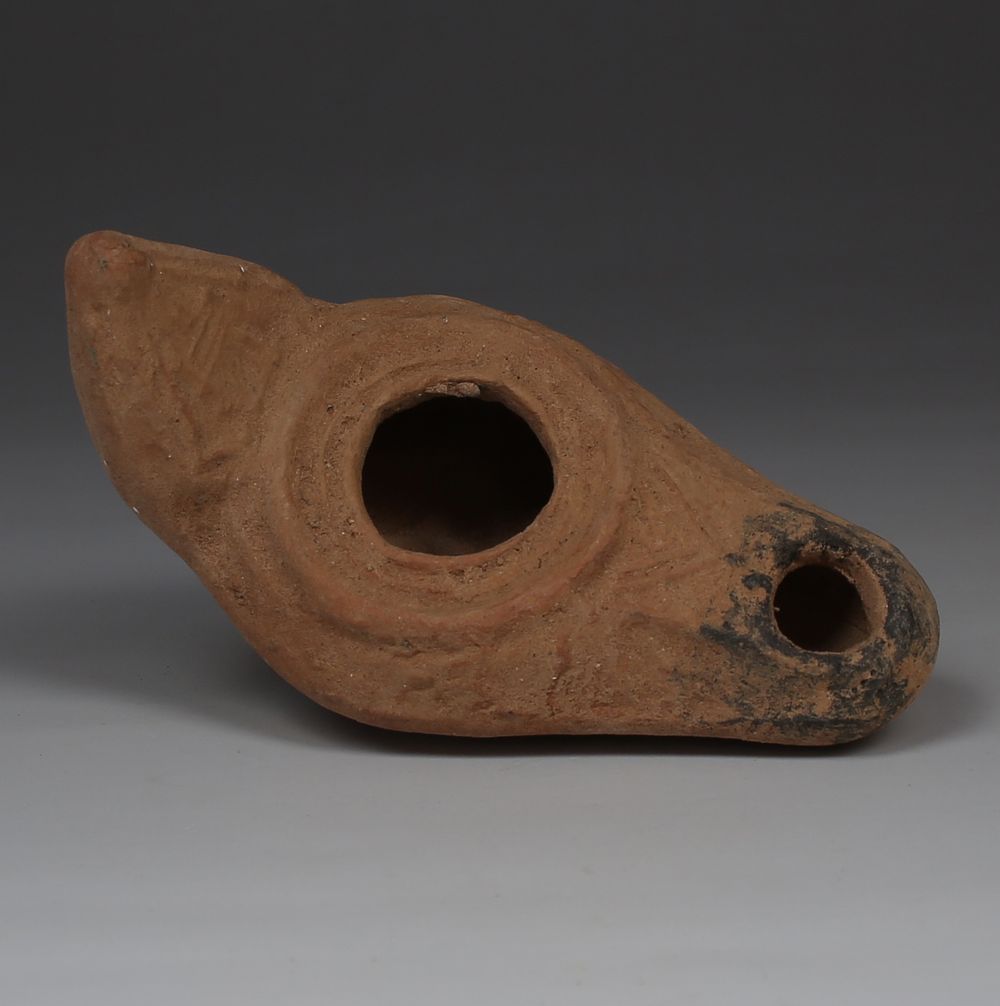
Bidspirit auction | Levantine oil lamp, Type Kennedy
Levantine oil lamp, Type Kennedy 20 - ITEM: Oil lamp, Type Kennedy 20 MATERIAL: Pottery CULTURE: Levantine PERIOD: 5th - 6th Century A.D DIMENSIONS: 53 mm x 55 mm x 105 mm CONDITION: Good condition PROVENANCE: Ex French private collection, acquired between 1970 - 1990 Comes with Certificate of Authenticity and Export Licence. If you are from outside the European Union, we will have to apply for the export licence again for your country, this takes 3 to 5 weeks and has a cost of 5% of the hammer price, this amount will be added to the final invoice. Levantine oil lamps are a significant category of ancient pottery, primarily found in the Levant region, which includes parts of modern-day Israel, Palestine, Lebanon, Jordan, and Syria. These oil lamps were widely used from the Hellenistic period through the Roman and Byzantine eras, providing an essential source of light in domestic, religious, and public spaces. Typically crafted from clay, Levantine oil lamps often had simple, functional shapes—usually round or slightly elongated with a small, shallow reservoir to hold oil. They were designed with a spout for the wick, which would be lit to provide illumination. The lamps were relatively small, making them portable and easy to use in various settings, from homes to places of worship. The design and decoration of Levantine oil lamps varied greatly, often reflecting the cultural influences of the different empires and peoples who ruled over the region. During the Hellenistic and Roman periods, many of the lamps were molded with detailed patterns, and sometimes featured symbolic imagery such as animals, human figures, or divine motifs. These decorative elements could serve both an aesthetic and a functional role, with some lamps featuring inscriptions or symbolic motifs believed to offer protection or blessings to the owner. In addition to functional designs, many lamps from this region were produced in molds, which allowed for mass production and easy distribution across the Levantine region and beyond. Levantine oil lamps also had a spiritual and ritual significance. In Jewish, Christian, and pagan contexts, oil lamps were used in religious ceremonies, often placed in sacred spaces, temples, or tombs as offerings or to provide light for rituals. For example, in early Christian sites, oil lamps were used in burial practices, and it was common to find them alongside other grave goods. The symbolism of light, often associated with divine presence and purity, meant that these lamps were not only utilitarian but also spiritual objects, contributing to the ambiance and sanctity of religious rituals.