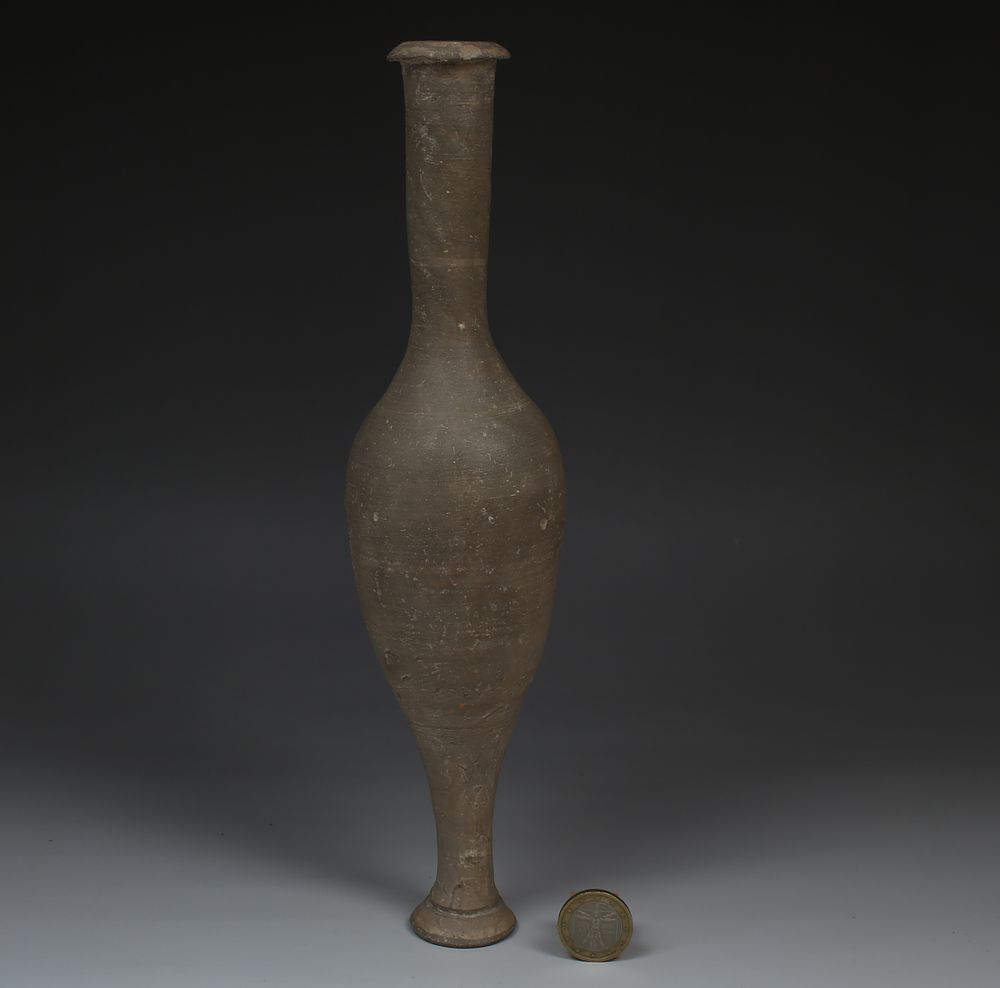
Bidspirit auction | Greek unguentarium
Greek unguentarium - ITEM: Unguentarium MATERIAL: Pottery CULTURE: Greek, Hellenistic period PERIOD: 3rd - 1st Century B.C DIMENSIONS: 280 mm x 65 mm CONDITION: Good condition PROVENANCE: Ex German private collection, G.S., acquired since 1966 Comes with Certificate of Authenticity and Export Licence. If you are from outside the European Union, we will have to apply for the export licence again for your country, this takes 3 to 5 weeks and has a cost of 5% of the hammer price, this amount will be added to the final invoice. The Greek Hellenistic unguentarium is a small, elegant container used primarily for storing perfumes, oils, and other aromatic substances, which were highly valued in ancient Greek society. These vessels, which gained prominence during the Hellenistic period (roughly 323–30 BCE), were typically made of glass or ceramic and featured a narrow neck with a small, round body. Their size and shape made them ideal for personal use, as they could be easily carried and stored in small spaces, such as a private chamber or a traveling kit. The unguentarium was often used to hold perfumed oils for daily grooming, religious rituals, or as a status symbol in elite circles, reflecting the cultural importance of fragrance in Hellenistic society. The design of the Hellenistic unguentarium varied, with some examples being very simple and utilitarian, while others were highly decorative, showcasing the craftsmanship and artistic sophistication of the period. Many glass unguentaria were blown and could be clear, colored, or even decorated with intricate patterns or motifs, including floral, geometric, or mythological designs. The vessels were sometimes adorned with painted or molded decorations that reflected the cultural tastes of the time. In addition to their aesthetic appeal, the unguentarium's functional design—often featuring a tight-fitting stopper—helped preserve the valuable contents, preventing the evaporation of the aromatic oils stored inside. These objects were not just practical items but also reflections of the personal style and wealth of their owners. Unguentaria were commonly found in various contexts, including domestic settings, burials, and religious spaces. In domestic environments, they were part of the grooming and bathing rituals, as fragrance was an important aspect of personal hygiene and social presentation. In funerary contexts, unguentaria were often placed in tombs as grave goods, indicating that they were considered valuable items that could accompany the deceased into the afterlife. The prevalence of unguentaria in Hellenistic burial sites suggests that these objects were seen as important not only in life but also in death, highlighting the enduring cultural significance of perfume and personal adornment in ancient Greek society.