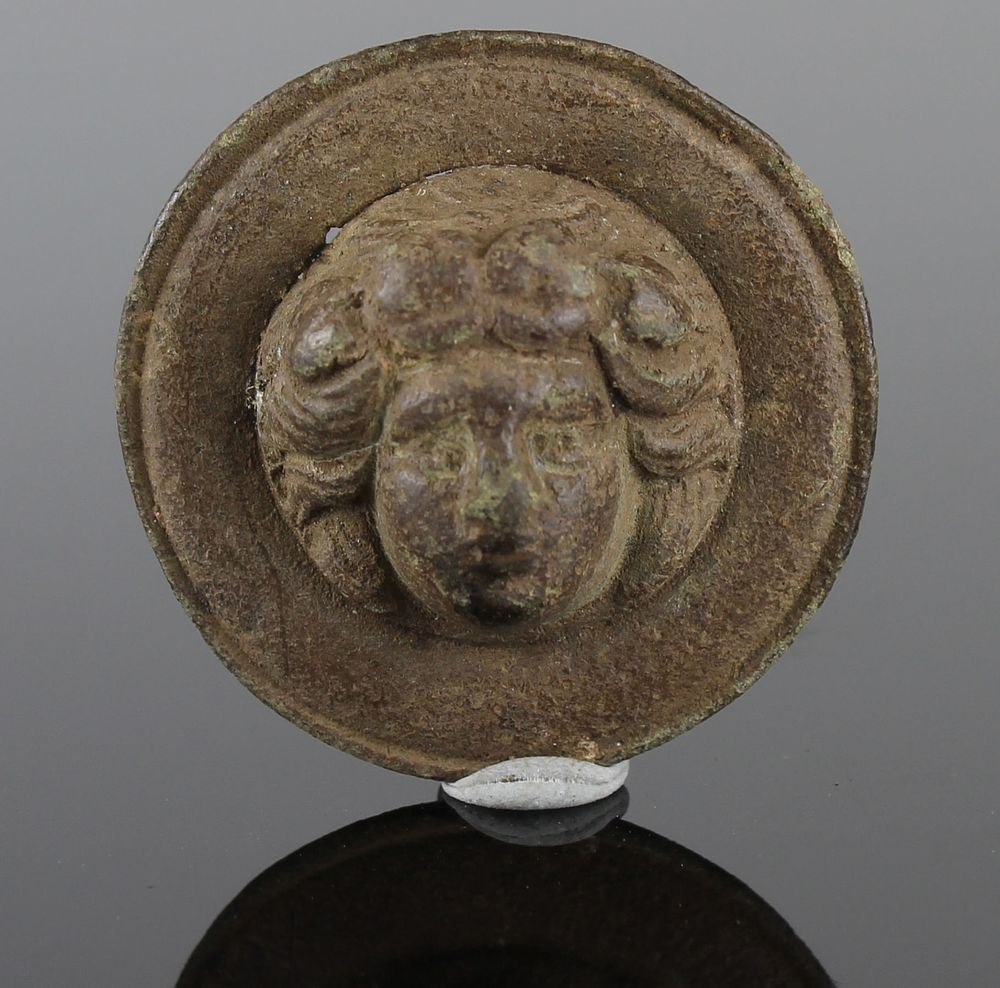
Bidspirit auction | Roman roundel with a female
Roman roundel with a female head - ITEM: Roundel with a female head MATERIAL: Bronze CULTURE: Roman PERIOD: 1st - 3rd Century A.D DIMENSIONS: 36 mm diameter CONDITION: Good condition PROVENANCE: Ex English private collection, acquired between 1970 - 1990 Comes with Certificate of Authenticity and Export Licence. If you are from outside the European Union, we will have to apply for the export licence again for your country, this takes 3 to 5 weeks and has a cost of 5% of the hammer price, this amount will be added to the final invoice. Roman roundels featuring female heads were decorative medallions that held both aesthetic and symbolic significance in Roman art and architecture. Typically crafted from materials like marble, terracotta, bronze, or sometimes even glass, these roundels displayed portraits or idealized images of women, often representing deities, personifications, or members of the elite. The round shape allowed for a compact and harmonious design, framing the female head within a circular border that emphasized its centrality and importance. These decorative elements were used in a variety of settings, including villas, public buildings, and tombs, where they added a sense of elegance and conveyed cultural ideals of beauty, virtue, and divinity. The female heads on Roman roundels were frequently idealized, embodying classical features such as symmetrical faces, serene expressions, and elaborate hairstyles. These idealized features often suggested a connection to Roman goddesses like Venus, the goddess of love and beauty, or Juno, the queen of the gods, whose virtues and attributes the roundels sought to evoke. Alternatively, the roundels could depict personifications, such as Fortuna (fortune) or Pax (peace), with each figure’s unique iconography subtly hinting at her identity and role. Hair styles were a key identifier as well, with elaborate curls or specific arrangements referencing the latest fashion trends, and sometimes even alluding to real-life noblewomen, who set these trends.