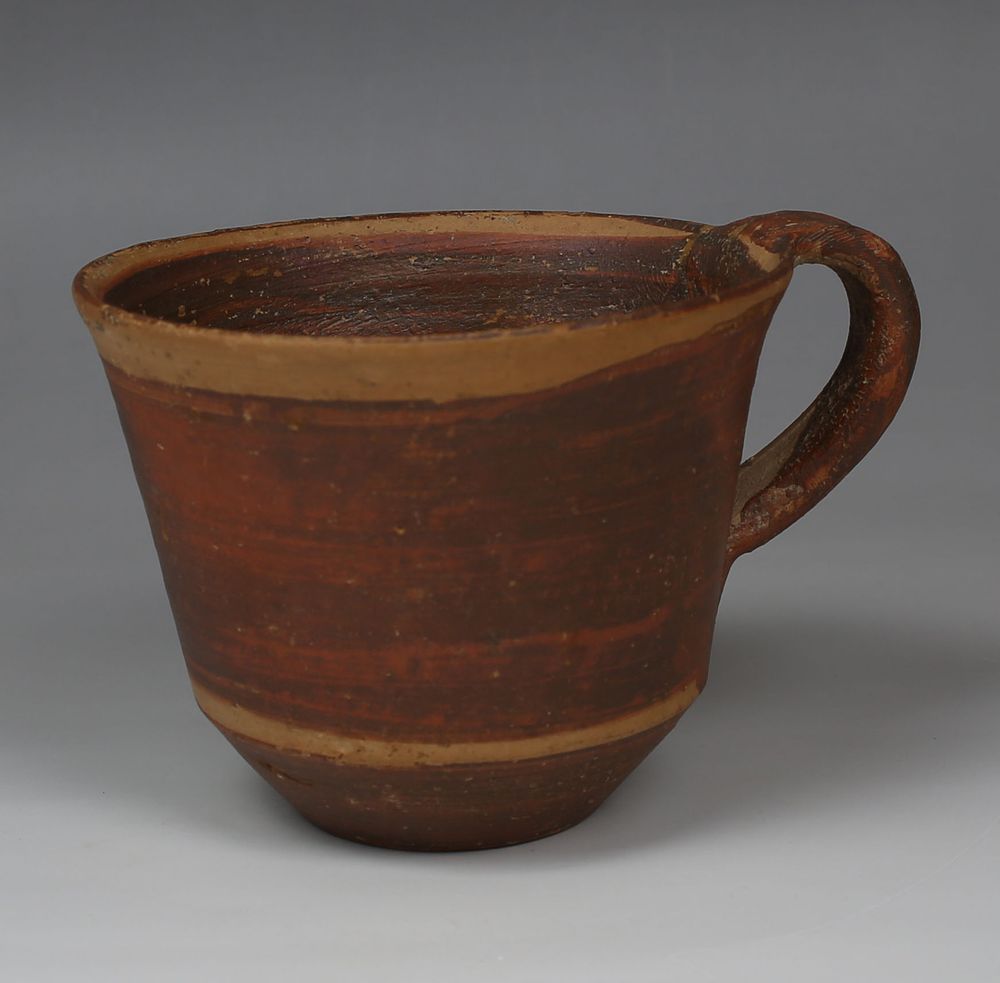
Bidspirit auction | Roman cup
Roman cup - ITEM: Cup MATERIAL: Pottery CULTURE: Roman PERIOD: 1st Century B.C - 1st Century A.D DIMENSIONS: 74 mm x 115 mm CONDITION: Good condition PROVENANCE: Ex German private collection, W.F., acquired before 2000s Comes with Certificate of Authenticity and Export Licence. If you are from outside the European Union, we will have to apply for the export licence again for your country, this takes 3 to 5 weeks and has a cost of 5% of the hammer price, this amount will be added to the final invoice. These vessels were typically made from terracotta and ranged from simple, utilitarian forms to more refined, decorative examples. The most common types included kothons (deep drinking cups), skyphoi (handled cups), and calices (goblet-like vessels). Many were produced using the wheel, allowing for standardized shapes, and were often coated with a fine slip to enhance their durability and appearance. While plain wares were widespread, decorated examples, particularly those with incised or stamped designs, were popular among wealthier individuals. One of the most significant ceramic styles of the Republican period was Black Gloss Ware (also called Campanian Ware), which became the dominant fineware used for drinking vessels. These cups were coated in a glossy black slip that imitated the look of metalware and were often decorated with incised lines, stamped patterns, or rouletting. Produced primarily in central Italy, especially in regions such as Campania and Etruria, Black Gloss Ware was widely traded and found in archaeological sites across the Mediterranean. The influence of Greek pottery styles, particularly from Athens, is evident in the forms and decoration of many Republican cups, reflecting the cultural exchanges between Rome and the Hellenistic world. By the late Republican period, new ceramic traditions began to emerge, leading to the development of Terra Sigillata, a fine red-slipped ware that would dominate Roman tableware in the Imperial era. However, Republican cups retained their importance as symbols of social interaction, particularly in banquets and public feasts, where communal drinking played a significant role in Roman society.