Bidspirit auction | Roman dice
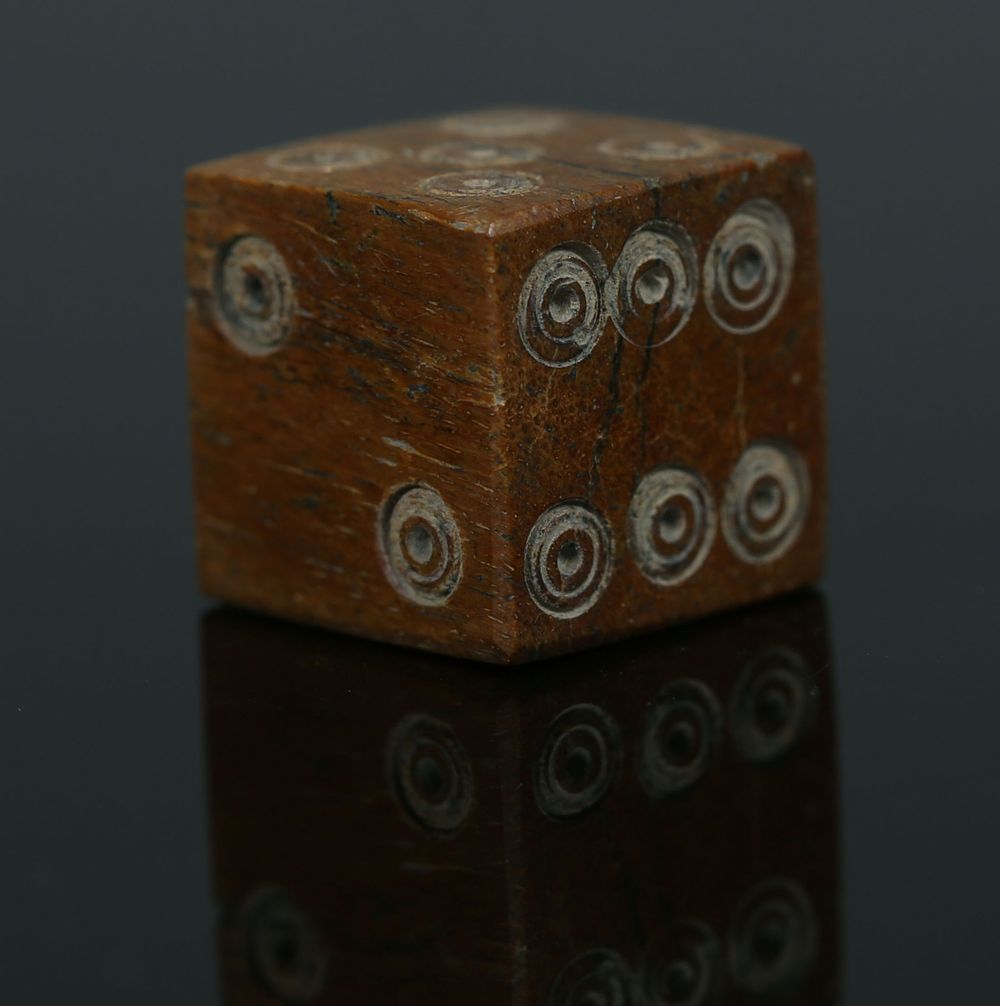
Roman dice - ITEM: Dice MATERIAL: Bone CULTURE: Roman PERIOD: 1st - 3rd Century A.D DIMENSIONS: 13 mm x 14 mm CONDITION: Good condition PROVENANCE: Ex Spanish private collection, acquired in London art market between 1980s - 1990s Comes with Certificate of Authenticity and Export Licence. If you are from outside the European Union, we will have to apply for the export licence again for your country, this takes 3 to 5 weeks and has a cost of 5% of the hammer price, this amount will be added to the final invoice. Roman dice made from bronze offer intriguing insights into the recreational activities and gaming culture of ancient Rome. Dice games were immensely popular among people of all social classes and were played for entertainment, gambling, and even religious rituals. The use of bronze to craft dice was practical due to the metal's durability and malleability, ensuring that the dice would withstand frequent use and retain their shape over time. Bronze Roman dice typically featured six sides, each marked with dots or pips representing numbers ranging from one to six. The numbering system on Roman dice was often arranged in such a way that opposite sides of the dice added up to seven, a design feature known as ”opposite faces add up to seven” or ”sevens-out.” This design ensured fairness and randomness in the outcome of dice rolls, crucial for maintaining the integrity of the game. Roman dice were not only used for recreational purposes but also held cultural and symbolic significance. Dice games were often associated with concepts of luck, fate, and fortune, and were sometimes employed in divination practices to predict the outcome of future events. The imagery and symbolism associated with dice were also reflected in Roman art and literature, where dice games were depicted as common pastimes enjoyed by people from all walks of life.