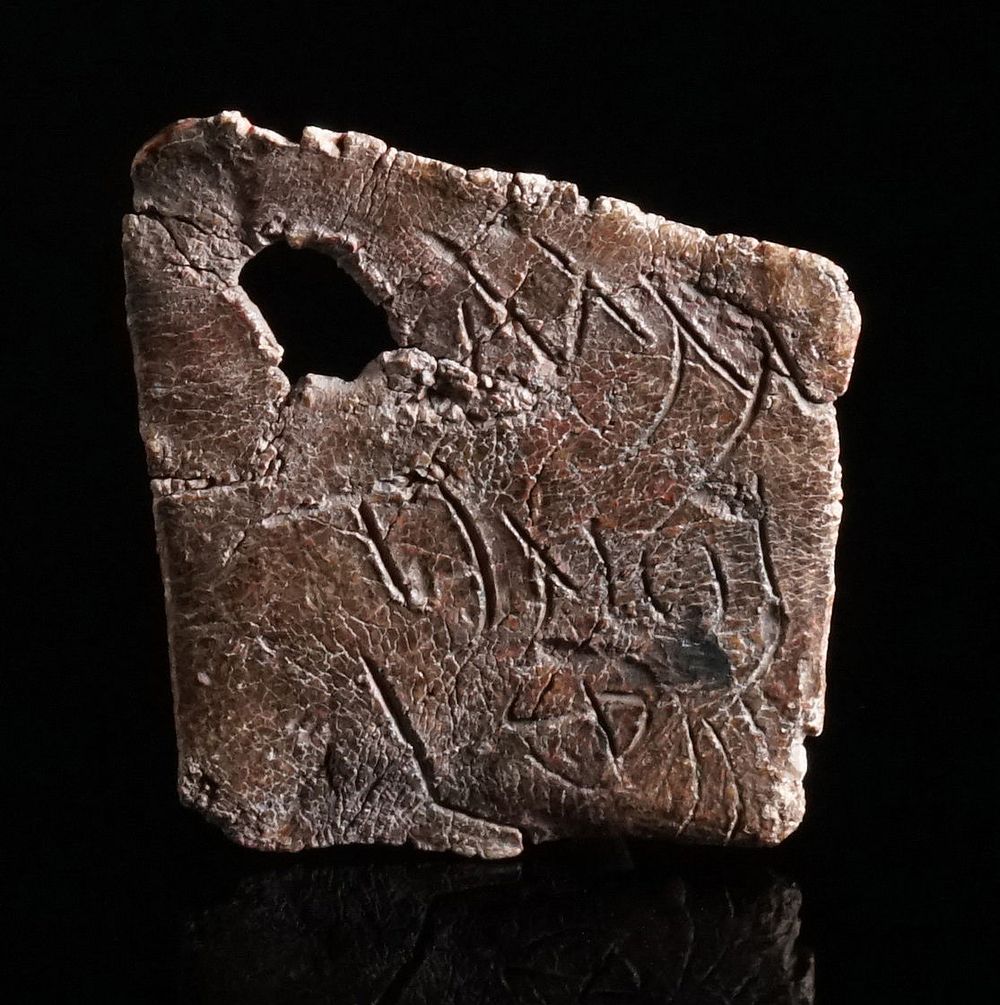
Bidspirit auction | Roman commercial label with cursive
Roman commercial label with cursive writing - ITEM: Commercial label with cursive writing MATERIAL: Lead CULTURE: Roman PERIOD: 2nd - 4th Century A.D DIMENSIONS: 30 mm x 26 mm CONDITION: Good condition PROVENANCE: Ex Austrian private collection, acquired on the European art market before 2000s Comes with Certificate of Authenticity and Export Licence. If you are from outside the European Union, we will have to apply for the export licence again for your country, this takes 3 to 5 weeks and has a cost of 5% of the hammer price, this amount will be added to the final invoice. Roman commercial labels made of lead, featuring inscriptions in cursive writing, were commonplace yet essential artifacts of the imperial economy. These small, often circular or rectangular pieces of soft metal served a variety of practical tagging purposes, from identifying raw materials to marking official consignments of goods. The choice of lead was strategic: it was easily inscribed with a metal stylus, even by an ordinary worker, and its pliability allowed it to be attached to objects by folding, stamping, or trapping a binding wire. Unlike monumental inscriptions carved in stone, the inscriptions on these labels were typically written in Roman cursive, a fast, informal script used for everyday documentation. This cursive, often challenging for modern readers to decipher, included both the earlier Old Roman Cursive (ORC) and the later New Roman Cursive (NRC) and provides invaluable insight into the vernacular Latin and literacy of the time. The contents of these cursive lead labels were strictly commercial or administrative. They often functioned as seals, known as signacula, to authenticate the contents or origin of packaged merchandise. For example, lead seals have been found stamped with the names or initials of military units or imperial officials, indicating that the consignments were official military or government supplies. Other labels might have recorded civic or taxation information, or the name of a private merchant or workshop, acting as an early form of a 'trademark' or quality control mark. The inscriptions would typically be abbreviated to fit the small surface area, conveying the necessary information—such as the item's provenance, a quantity, or the responsible individual—in a concise and functional manner. The archaeological recovery of these lead labels, particularly in large numbers from ports and military sites, highlights the complex logistics of Roman trade and administration. For instance, large finds of inscribed lead sealings have been made in Britain and at the port of Lyon, reflecting the mass transit of bulkier merchandise, such as lead ore (metallum). These artifacts, which also include items like military ”dog tags” and identifying collars for fugitive slaves, demonstrate that lead was a widely used medium for objects requiring cheap, durable, and readily inscribed identification. The cursive script on these humble labels, therefore, gives a direct textual link to the bureaucratic and mercantile daily life of the Roman Empire, far removed from the formal texts of stone monuments.