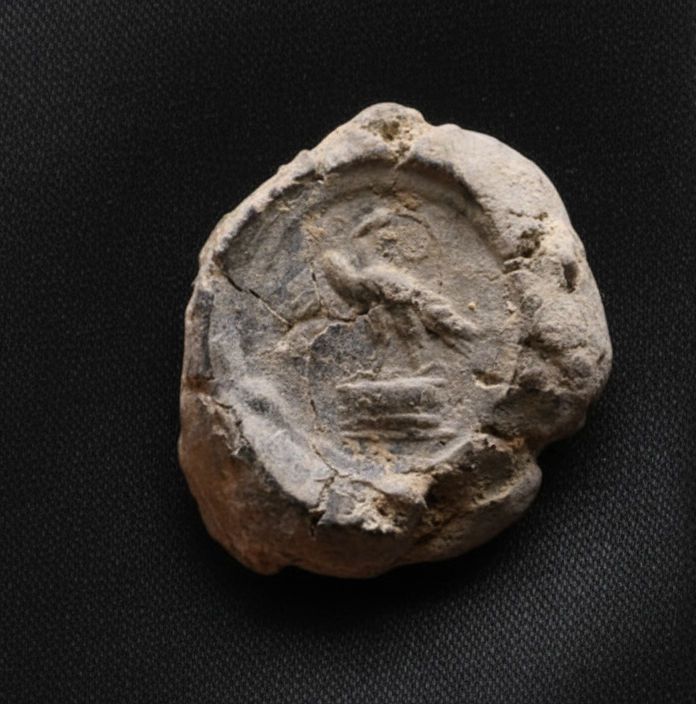
Bidspirit auction | Roman tessera depicting an eagle
Roman tessera depicting an eagle - ITEM: Tessera depicting an eagle MATERIAL: Pottery CULTURE: Roman PERIOD: 1st - 2nd Century A.D DIMENSIONS: 15 mm CONDITION: Good condition PROVENANCE: Ex German private collection, acquired before 2000s BIBLIOGRAPHY: Maddoli: no.852; Sena Chiesa, gems: no.1283 Comes with Certificate of Authenticity and Export Licence. If you are from outside the European Union, we will have to apply for the export licence again for your country, this takes 3 to 5 weeks and has a cost of 5% of the hammer price, this amount will be added to the final invoice. The term tessera was also applied to small tokens or tiles, often made of ceramic (terracotta or clay), lead, or bronze. These were not seals impressed onto goods like a clay lump, but were themselves stamped objects that served as a form of administrative or commercial ticket. They functioned similarly to modern tokens or chits, used for entry to events, participation in religious festivals (especially in places like Palmyra, where clay tokens were common), or as part of state distribution programs, such as the tesserae frumentariae (tokens for grain). The clay used for these tokens was fundamentally the same material used in pottery, and their manufacture sometimes mirrored pottery techniques, including firing in a kiln and having detailed, embossed designs on one or both sides. In some cases, the symbols or names found on these commercial tesserae (especially the Tessera Nummularia related to money or weights) have been linked to control marks or stamps found on amphorae and other transport vessels from the Eastern Mediterranean. This overlap suggests that a common administrative system—or at least a shared set of symbols and practices—was used to manage different commercial aspects of Roman life, from identifying pottery workshops to distributing state resources. While the clay tokens themselves were not the act of sealing a product, they were a tool for commercial verification and control. They were often decorated with imperial portraits, mythological scenes, letters, or geometric patterns. More importantly, some ceramic tokens incorporated private seals or countermarks to prevent counterfeiting, making the object distinct and ensuring its authenticity for the recipient.