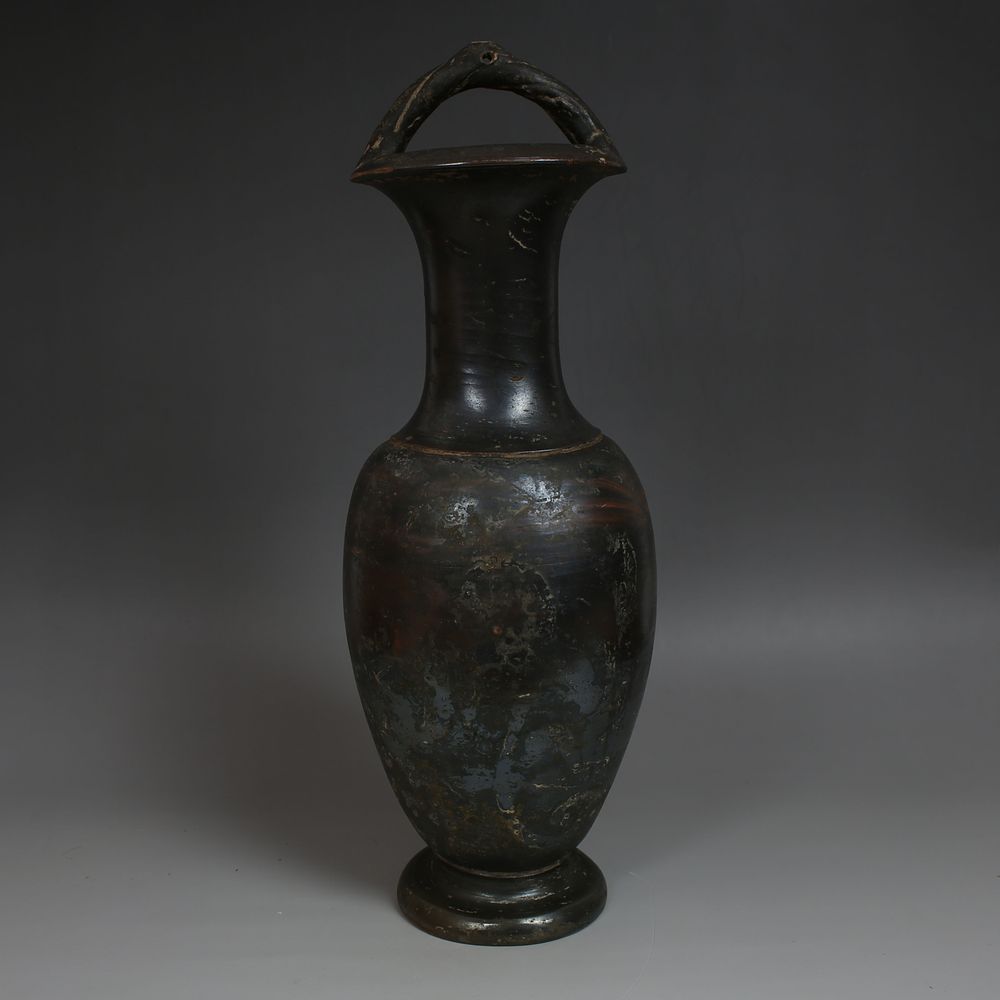
Bidspirit auction | Greek bail amphora
Greek bail amphora - ITEM: Bail amphora MATERIAL: Pottery CULTURE: Greek PERIOD: 4th Century B.C DIMENSIONS: 320 mm x 113 mm CONDITION: Good condition, repaired PROVENANCE: Ex Dutch private collection, acquired before 2000s Comes with Certificate of Authenticity and Export Licence. If you are from outside the European Union, we will have to apply for the export licence again for your country, this takes 3 to 5 weeks and has a cost of 5% of the hammer price, this amount will be added to the final invoice. The bail amphora is a distinctive type of ancient Greek pottery used primarily for holding and transporting liquids, like wine or oil. Its most defining characteristic is its unique handle structure: a single, high-arching handle, or bail, that spans from one side of the rim to the other, making it easily distinguishable from the more common two-handled neck or belly amphorae. This single, large handle was practical for carrying, especially when the vessel was full. While amphorae, in general, were common throughout the Mediterranean, the bail amphora form is often associated with the Black Sea region and the workshops of Attica (Athens) and Euboea during the 6th and 5th centuries BCE. They were frequently decorated using the Black-figure technique, featuring scenes from Greek mythology, daily life, or athletic contests. Stylistically, the shape of the bail amphora, although standardized in its handle, showed variations in its body. It typically had an ovoid body, a distinct neck that rose above the shoulders, and often a small, simple foot. The artistic decoration on these amphorae followed the general trends of Attic pottery. Black-figure painters would silhouette figures in black slip against the red clay background, adding incised details and touches of red and white pigment. Key painters, like the Amasis Painter or the Affecter, created masterpieces on this form. The iconography (the subject matter of the decoration) often provides valuable insights into Greek culture, religion, and social practices, such as the symposion (drinking party) or funerary rites. The functionality of the bail amphora extended beyond mere storage and transport. Like many other amphora types, they were also used as prizes in Panhellenic games or as grave markers and funerary offerings. The contents of the amphora might have been significant; for instance, large Panathenaic prize amphorae, which were a specialized type of bail amphora, were filled with olive oil from the sacred groves of Attica. The study of the distribution of bail amphorae, as revealed through archaeological finds across the Mediterranean, helps trace ancient trade routes and the extent of Athenian and Euboean commercial influence, confirming their role as both an art object and a vital economic vessel in the ancient world.