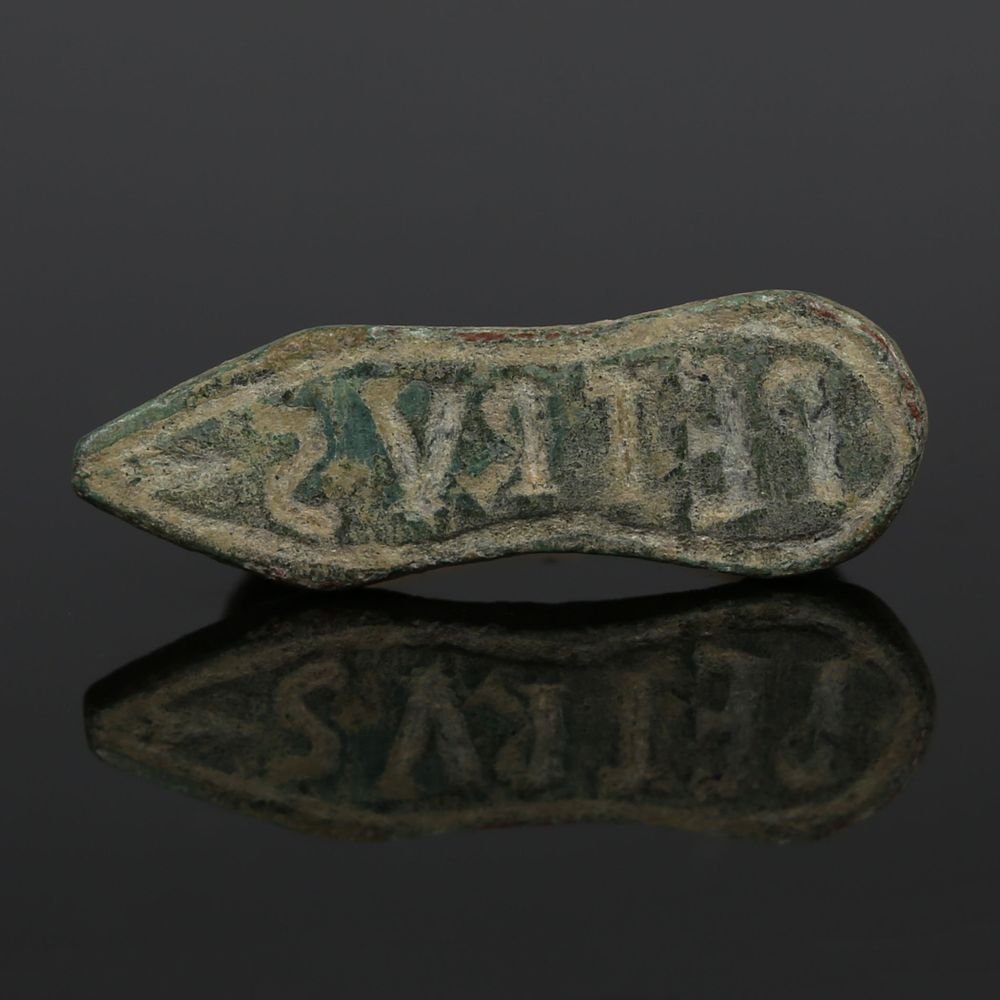
Bidspirit auction | Roman seal stamp with inscription
Roman seal stamp with inscription 'PETRVS' - ITEM: Seal stamp with inscription 'PETRVS' MATERIAL: Bronze CULTURE: Roman PERIOD: 1st - 2nd Century A.D DIMENSIONS: 20 mm x 31 mm CONDITION: Good condition PROVENANCE: Ex European private collection, Ex Lakythos S.A.R.L (1987), Ex Galerie Hydra, Geneva, Switzerland (1984) Comes with Certificate of Authenticity and Export Licence. If you are from outside the European Union, we will have to apply for the export licence again for your country, this takes 3 to 5 weeks and has a cost of 5% of the hammer price, this amount will be added to the final invoice. Roman bronze seal stamps, often taking the form of a signet ring (or annulus signatorius) or a separate stamp with a handle (signaculum), were critical instruments in ancient Roman society. Their primary function was to secure, authenticate, and validate personal and commercial documents, as well as property. By impressing the seal's carved design, known as an intaglio, onto a piece of soft material—typically wax or clay (bulla)—the owner created a tamper-evident mark of identity. This act served as a legal signature for a largely non-literate population, ensuring that a letter remained private, a contract was valid, or a container of goods was unopened. Bronze was a practical and affordable metal for this purpose, offering durability and allowing for mass-produced stamps used in large administrative contexts, such as marking roof tiles or commercial goods. The iconography on these bronze seals was deeply personal and reflected the owner's status, beliefs, and interests. While the wealthy elite often used rings set with finely carved semi-precious stones (gems), bronze signets for the middle class or administrative stamps featured directly engraved designs. Common motifs included portraits of the owner or a family member, deities like Mercury (god of commerce) or Fortuna (goddess of luck), mythical creatures, and animals. Inscriptions, typically the owner's name or initials, were carved in reverse so they would appear correctly when stamped. The choice of image conveyed a sense of identity and could also serve an apotropaic (protective) function, acting as an amulet against evil alongside its practical purpose. The wide distribution of bronze seal stamps and signet rings across the Roman Empire underscores their importance in both private life and public administration. The use of seals was not confined to a single social class, though the material and artistic quality indicated the owner's wealth. While signet rings were carried on the person for daily use, larger bronze stamps (signacula) were employed by officials or trade guilds to mark standardized items, such as the lead sealings on packages or wine casks. Their survival in the archaeological record offers valuable insight into Roman legal practices, literacy levels, and the personal identities and symbolic preferences of individuals who relied on this ancient yet effective method of authentication.