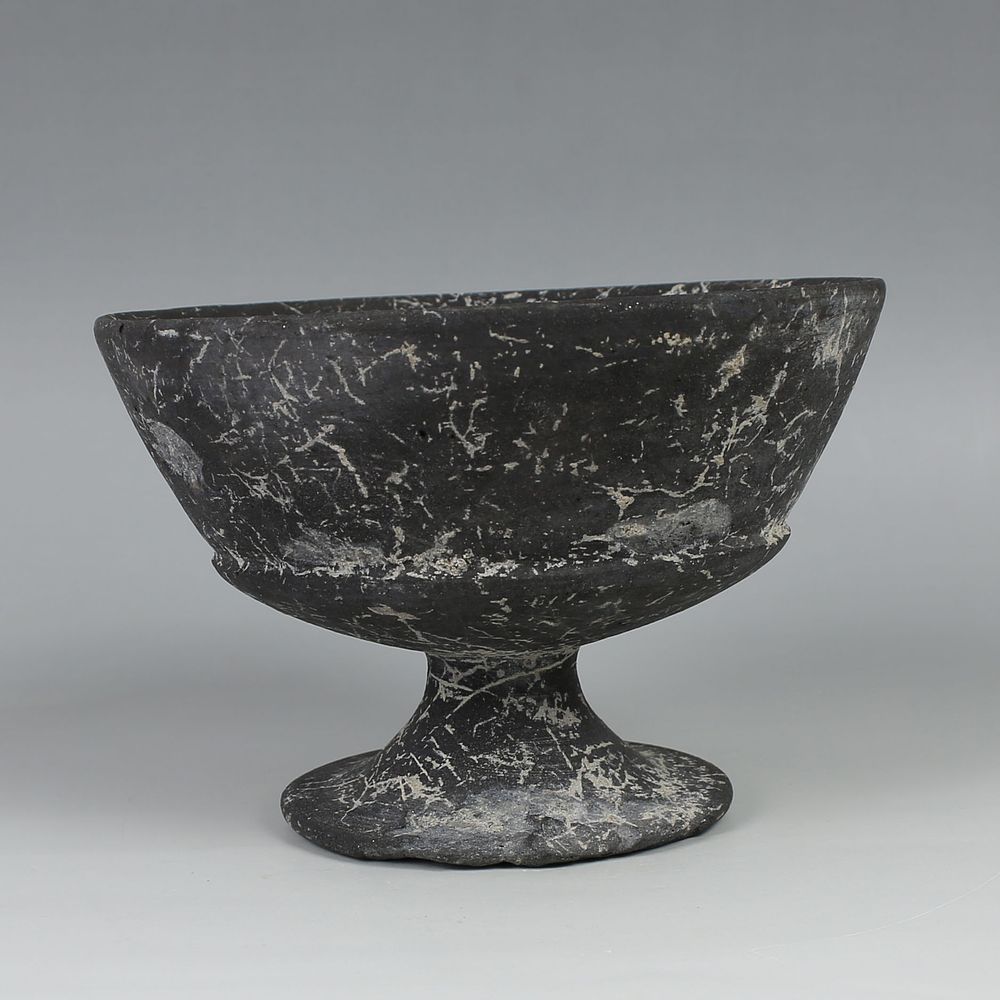
Bidspirit auction | Etruscan chalice
Etruscan chalice - ITEM: Chalice MATERIAL: Pottery, Bucchero CULTURE: Etruscan PERIOD: 7th - 6th Century B.C DIMENSIONS: 90 mm x 130 mm CONDITION: Good condition PROVENANCE: Ex European private collection, Ex H.A.C. Kunst der Antike (1984), Ex German private collection, Dr. K.D., Frankfurt (1978) Comes with Certificate of Authenticity and Export Licence. If you are from outside the European Union, we will have to apply for the export licence again for your country, this takes 3 to 5 weeks and has a cost of 5% of the hammer price, this amount will be added to the final invoice. The Etruscan chalice was a distinctive type of drinking vessel used by the Etruscans, the ancient civilization of central Italy that flourished between the 8th and 3rd centuries BCE. Chalices were typically made of ceramic, bronze, or bucchero — the characteristic black Etruscan pottery — and were used in both daily life and ritual contexts. Their form often included a deep bowl with a wide rim, supported by a tall stem and foot, making them elegant and easy to handle during banquets or libation ceremonies. The chalice was part of the broader Etruscan interest in communal dining and wine drinking, which they inherited and adapted from Greek symposium culture. Decoration on Etruscan chalices could range from simple burnished surfaces to elaborate figural scenes. In bucchero examples, the glossy black surface was often incised or stamped with geometric or floral motifs, while in bronze or painted ceramic versions, mythological scenes were common. These decorations sometimes reflect both Etruscan and imported Greek themes, showing how the Etruscans absorbed and reinterpreted foreign artistic influences. Some chalices were clearly ceremonial, perhaps used for offerings to the gods or for funerary banquets to honor the dead.