Bidspirit auction | Egyptian plaque with sphinx with
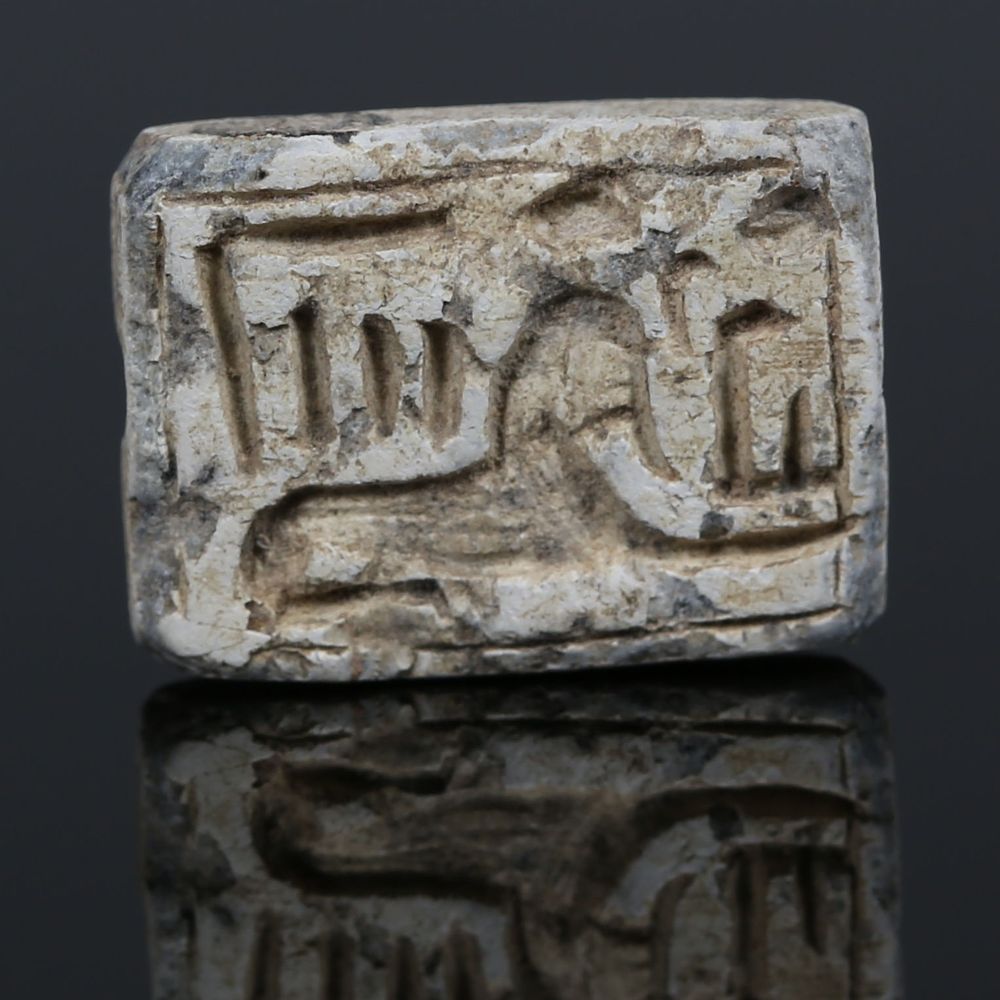
Egyptian plaque with sphinx with schematic hieroglyphs and very crude flanking crowns of Lower Egypt - ITEM: Plaque with sphinx with schematic hieroglyphs and very crude flanking crowns of Lower Egypt MATERIAL: Steatite CULTURE: Egyptian PERIOD: Ramesside, 1300 - 1100 B.C DIMENSIONS: 11 mm x 17 mm CONDITION: Good condition PROVENANCE: Ex American egyptologist collection, active in the early part of the 20th century, brought to the US with the family in 1954. Comes with Certificate of Authenticity and Export Licence. If you are from outside the European Union, we will have to apply for the export licence again for your country, this takes 3 to 5 weeks and has a cost of 5% of the hammer price, this amount will be added to the final invoice. The ancient Egyptian scarab is an amulet or seal modeled after the dung beetle (Scarabaeus sacer), an insect that held profound religious significance. Egyptians observed the beetle's habit of rolling a ball of dung across the ground and associated this action with the god Khepri, the manifestation of the rising sun. Khepri, often depicted as a man with a beetle for a head, was believed to roll the sun disk over the eastern horizon at dawn, symbolizing the concept of renewal and rebirth. Because the beetle's offspring seemed to emerge spontaneously from the dung ball, the scarab became a powerful emblem of Kheper (which means ”to come into being” or ”to create”), representing the endless cycle of life, death, and resurrection Scarab artifacts were incredibly common and produced throughout almost all periods of Egyptian history, serving both practical and spiritual functions in daily life. Most scarabs were made from glazed steatite (a soft stone that hardens when fired) but were also carved from materials like amethyst, basalt, lapis lazuli, and carnelian. The flat underside of the beetle was typically inscribed or decorated with various motifs: the names of pharaohs (like Amenhotep III's commemorative scarabs), titles of officials, private names, protective mottoes, or simply geometric designs. In this capacity, scarabs were pierced longitudinally to be strung on a cord and used as personal seals for authenticating documents or marking ownership, as well as being worn as amulets for protection and good luck. The most crucial ritualistic use of the scarab was in funerary practices, particularly the Heart Scarab of the New Kingdom and later periods. This large, often basalt or green stone, scarab was placed over the heart of the deceased during mummification, sometimes replacing the actual heart. The base was inscribed with a vital spell, specifically Chapter 30B of the Book of the Dead, which entreated the heart—considered the seat of the soul and memory—”do not stand as a witness against me” during the final judgment before Osiris. The Heart Scarab thus served as a magical safeguard, ensuring that the deceased could successfully navigate the ”Weighing of the Heart” ceremony and achieve a peaceful journey into the afterlife and eternal rebirth.