Bidspirit auction | A Letter of Torah Chiddushim
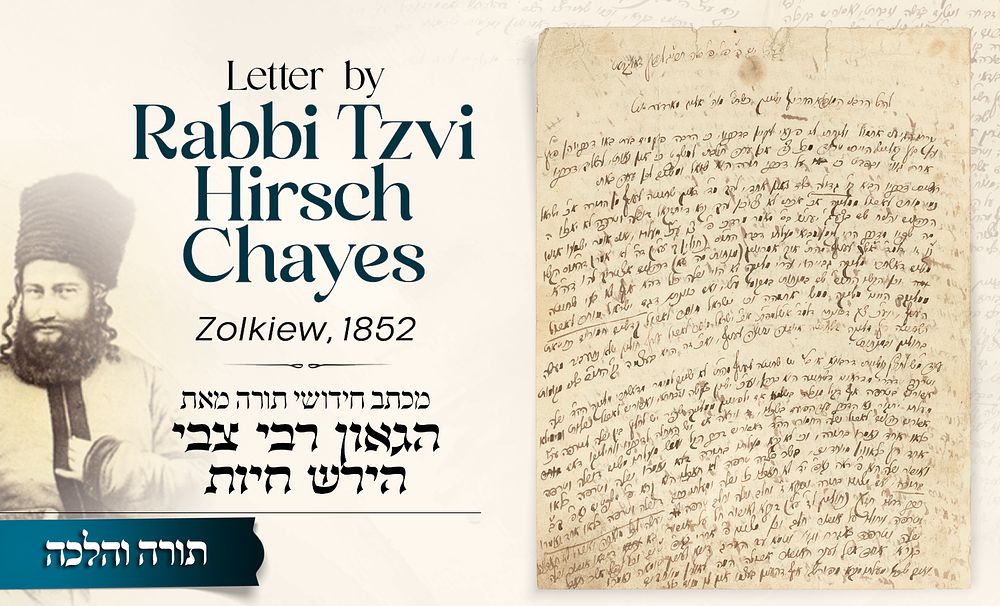
A Letter of Torah Chiddushim by the Gaon Rabbi Tzvi Hirsch Chayes. Zolkiew, 1852 * A lengthy letter of Torah chiddushim in the handwriting of the Gaon Rabbi Tzvi Hirsch Chayes, author of the glosses of Maharatz Chayes, printed in the Vilna Shas. The Gaon Rabbi Tzvi Hirsch Chayes (1805–1855) was born in Brody and was a distinguished disciple of the great sages of Brody: Rabbi Ephraim Zalman Margolies, Rabbi Tzvi Hirsch Charif, and Rabbi Elazar Landau. He was known as possessing a comprehensive knowledge in all the hidden treasures of Torah, as well as having a vast secular knowledge. From 1828, he served in the rabbinate of Zolkiew, and in 1852, he was appointed Rav of Kalish. In the present letter, dated that same year, he signs: “Here in Zolkova, and my forthcoming appointment is in Kalish.” Despite having waged a fierce struggle against the Reform movement, he nevertheless maintained correspondence with figures associated with it. This alone sufficed to blemish his reputation in the eyes of the chassidim who opposed him. The main body of the letter addresses a formidable difficulty in Maseches Minchos, which Maharatz Chayes had already mentioned in Shu”t Maharatz, section 48. He also engaged in discussion on this matter with the Gaon Maharam Eisenstadter, Av Beis Din of Ungvar, as he notes in the present letter: “I have already asked my friend about this, the late Gaon, the honorable Rabbi Meir, Av Beis Din of Ungvar.” Maharam Eisenstadter likewise refers to this correspondence in his teshuvos Imrei Eish, Yoreh De’ah, at the end of siman 37. (All of this stands in contrast to the position of the author of Lev HaIvri that Maharam Eisenstadter deliberately ignored the letters of Maharatz Chayes addressed to him and did not respond to him.) Zolkiew, 1852 . A folded leaf, three pages. Size : 17 × 22 cm. Condition : A small tear with the loss of two words. This letter was first printed at the end of Chiddushei HaRan on Avodah Zarah (Jerusalem, 1903), published by the recipient of the letter, Rabbi Eliyahu Marder.