Bidspirit auction | Unique: The First Seder Limud
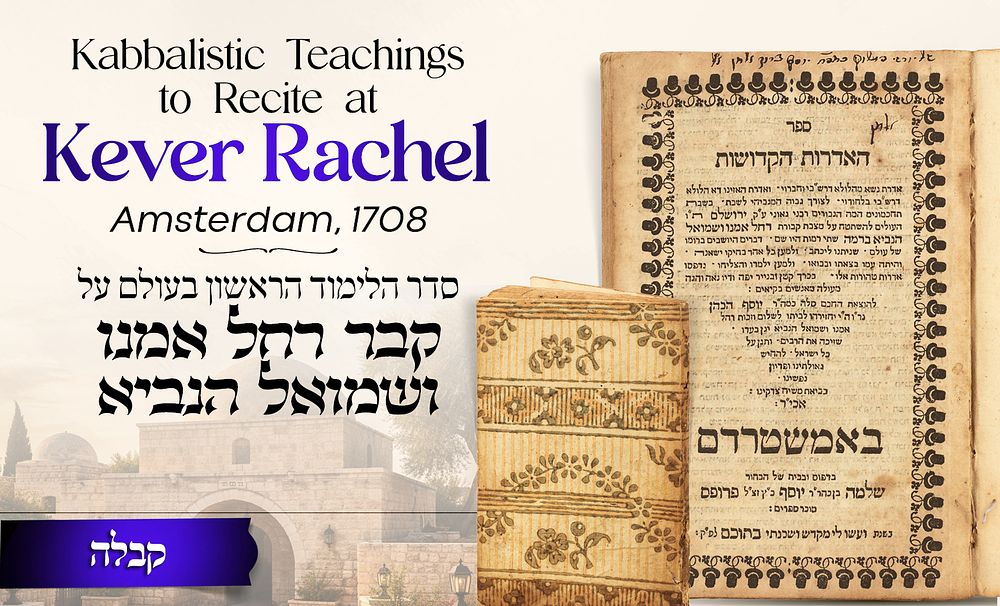
Unique: The First Seder Limud for Reciting at Kever Rachel and Kever Shmuel HaNavi – The Holy Idros – Amsterdam, 1708 * Idra Rabba and Idra Zuta from the Zohar, on the portions of Parshas Naso and Ha’azinu, edited according to the manuscripts of the kabbalist Rabbi Nosson Shapira. The text was prepared by the young Yerushalmi gaon Rabbi Moshe Chagiz (the Maniach), author of Lekach HaKemach. At the beginning of the sefer, there is a lengthy introduction by him, much of which is devoted to matters of Kabbalah. The sefer was printed in Amsterdam specifically “for a lofty purpose — for the rabbanim and Gedolei Hador of the Holy City of Yerushalayim” — who would travel at set times during the year to pour out their prayers at the resting places of Rachel Imeinu and Shmuel HaNavi. There, they would recite the Seder HaIdros as printed in this very volume. This is the first Seder Limud in the world that was printed specifically for reciting at Kever Rachel Imeinu and Kever Shmuel HaNavi. It is extremely moving to read the words of the Maniach describing the prayers of the tzaddikim at the kever of Rachel Imeinu: “To arouse her to weep — that she should plead before her Creator on behalf of her children, her beloved and precious sons, that the wrath of Hashem be turned away from them, and that He remember them for good.” The proceeds from the sale of the sefer were dedicated to the upkeep of the holy sites of Rachel Imeinu and Shmuel HaNavi, as the Maniach writes. He notes that the funds could be entrusted to the Rishon LeTzion, Rabbi Avraham Yitzchaki, author of Zera Avraham, who at that time was in Europe on behalf of Yerushalayim. Amsterdam, 1708. Page Count : [3], 25 leaves. Size : 14.2 cm. Condition : Good, with holes along the spine and in the final leaves. An illustrated and colorful original cardboard binding. ------------------- Idra Rabba and Idra Zuta The Idros are the most well-known sections of the Zohar. The term Idra in Aramaic means an “assembly, ” referring to the assembly of the sages with Rashbi, during which they received from him the deepest secrets of the Torah. In Idra Zuta (small assembly), fewer sages were present, hence it is called zuta (small), distinguishing it from the Idra Rabba (large assembly). The assembly of the sages described in Idra Zuta took place on the day of Rashbi’s passing and contains the profound secrets he revealed on that day, along with a description of his passing. This Idra is also customarily recited on Lag BaOmer.