Bidspirit auction | Pocket-Format Handwritten Ashkenazic Siddur for
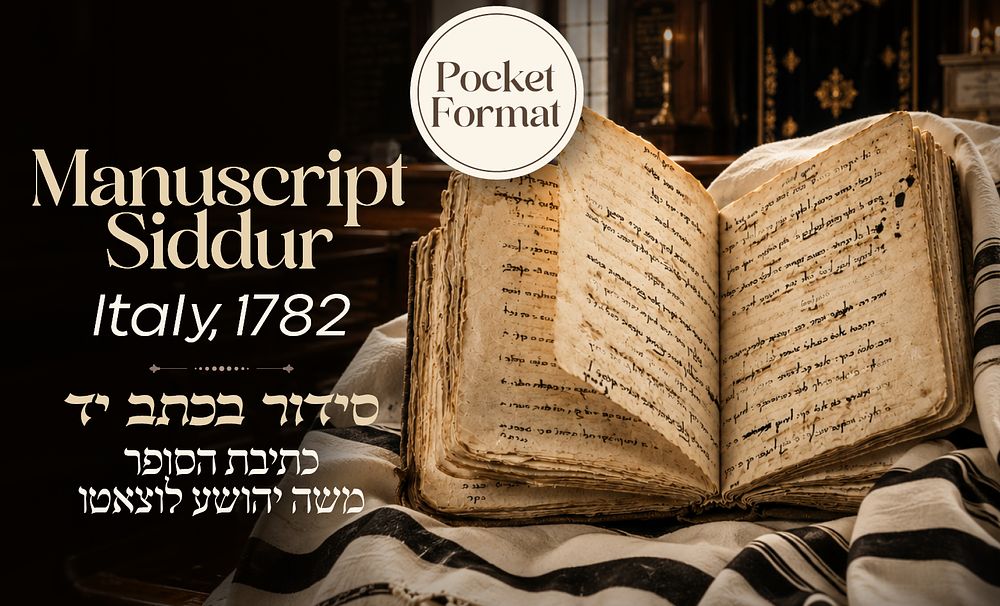
Pocket-Format Handwritten Ashkenazic Siddur for the Entire Year – Written by the Scribe Moshe Yehoshua Luzzatto – Italy, 1782 * A handwritten siddur containing the prayers for weekdays, Shabbos, and festivals, following the Ashkenazic rite practiced in Italy. Pocket format. At the beginning of the Siddur is a title page within a decorative border, on which the scribe recorded his name and the date of completion: “Prayers for the entire year, Ashkenazic, by the scribe Moshe Yehoshua Luzzatto, 1782.” The scribe signed his name once again on the final page: “Written by Moshe Yehoshua Luzzatto, son of Rabbi Eliezer Luzzatto.” Before the advent of printing, all siddurim were, of course, handwritten. As the years passed and printed siddurim became increasingly widespread, handwritten siddurim gradually became less common. By the mid-eighteenth century, complete handwritten siddurim were already uncommon. The Luzzatto family was a large Ashkenazic-Italian family with many branches, whose origins trace back to the city of Lausitz in Germany. The most renowned member of the family was the Ramchal, Rabbi Moshe Chaim Luzzatto, author of Mesillas Yesharim and numerous other works, who served as chazzan of the Ashkenazic synagogue in Padua. The Siddur contains: morning blessings; Shacharis; the 72 pesukim; Ani Maamin; Maariv; Kabbolas Shabbos; Friday night prayers; Yotzer for Shabbos; Shabbos Shacharis, Mussaf, and Minchah; the order of prayers following Minchah; Motzaei Shabbos; Hallel; Mussaf for Rosh Chodesh; Kiddush Levanah; the Chanukah service and Torah readings; the blessings over Megillas Esther; the Purim Torah reading; Mussaf for the Three Festivals; prayers for Rosh Hashanah and Yom Kippur; Neilah; daily Tehillim; and Birkas Hamazon. Northern Italy? 1782. Original Page Count: [1], 26, 26–85, 81–123, [1], 124–130, 132–137 leaves. Altogether, more than 280 handwritten pages. Size: Approximately 13 cm high. Condition: Good–moderate, characteristic of a siddur intended for regular use. Stains and wear. A hole in the title page. A tear with loss to leaf 21, affecting several words. Antique cloth binding, slightly worn.