Bidspirit auction | Very Early Slavita Machzor! Machzor
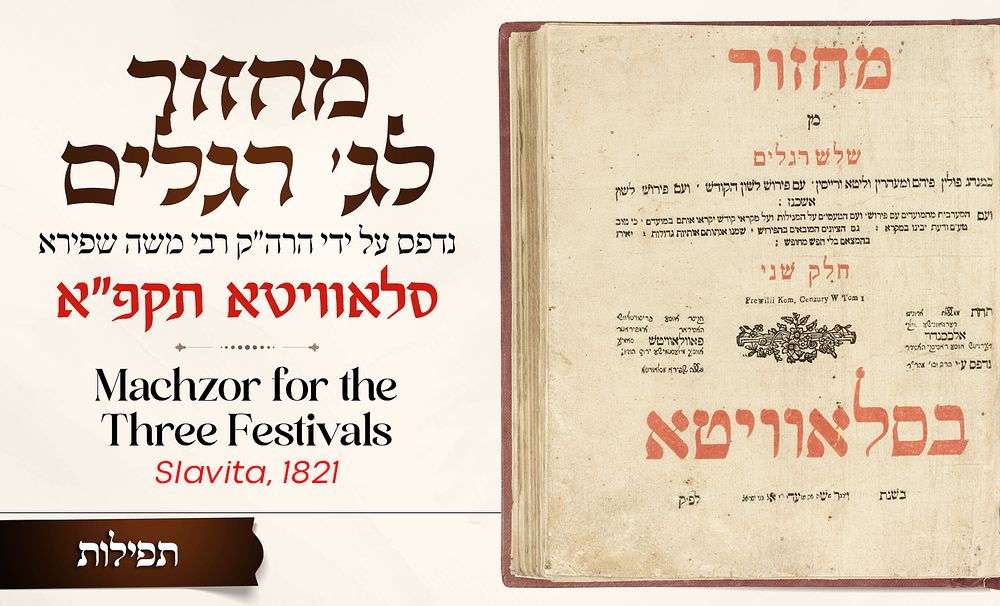
Very Early Slavita Machzor! Machzor for the Three Festivals Printed by Rabbi Moshe Shapira Slavita, 1821 * Part II of the Machzor, containing the prayers for the Three Festivals — Sukkos, Simchas Torah, Pesach, and Shavuos — with a commentary on the piyutim and yotzros, together with their Yiddish translation. Nusach Ashkenaz. Includes the prayers for Ma'ariv, Shacharis, Musaf, and Minchah, together with the yotzros, Megillas Koheles, Megillas Rus, Tefillas Geshem, and Tefillas Tal. It was printed by Rabbi Moshe Shapira, Av Beis Din of Slavita, son of Rabbi Pinchas of Koritz. The Tefillas Geshem (Sukkos) and Tefillas Tal (Pesach) are adorned with fine woodcut illustrations depicting the twelve zodiac signs. This machzor was printed in 1821, which according to what is known, is the first year Rabbi Moshe Shapira began printing machzorim! There are two different editions from the Slavita Press (and possibly even a third) that bear the date 1821. No earlier Slavita editions of machzorim are known, not even from the ‘Berelach period’ — a period in the early nineteenth-century when Rabbi Moshe Shapira printed books anonymously, listing two printers named “Ber” on the title pages instead of his own name. A rare edition, not recorded by the Institute for Hebrew Bibliography. It seems the National Library of Israel possesses only a single incomplete copy. Slavita, 1821. Page Count: [1], 158 leaves. Height: 25 cm. Condition: Good to fair. Paper repairs to the corners of dozens of the opening leaves and several leaves at the end. A few leaves have minor loss affecting several words (completed by facsimile). Signs of use and light wear. Margins are uneven. - - - - - - - - - Shapira Press The sefarim printed in Slavita were enthusiastically embraced by chassidic tzaddikim. Rebbes and devout chassidim yearned to pray and study using sefarim printed with sanctity and purity by the Shapira family press. “Every G-d-fearing person should make an effort to acquire sefarim from old printings, which were for the most part produced by G-d-fearing printers, especially the sefarim printed in Slavita and Zhitomir by the grandsons of the Rav of Koritz, who were great and holy printers” (Taharas HaKodesh by the Shomer Emunim, ch. 6).