Bidspirit auction | Trespassing dispute in slaughter and
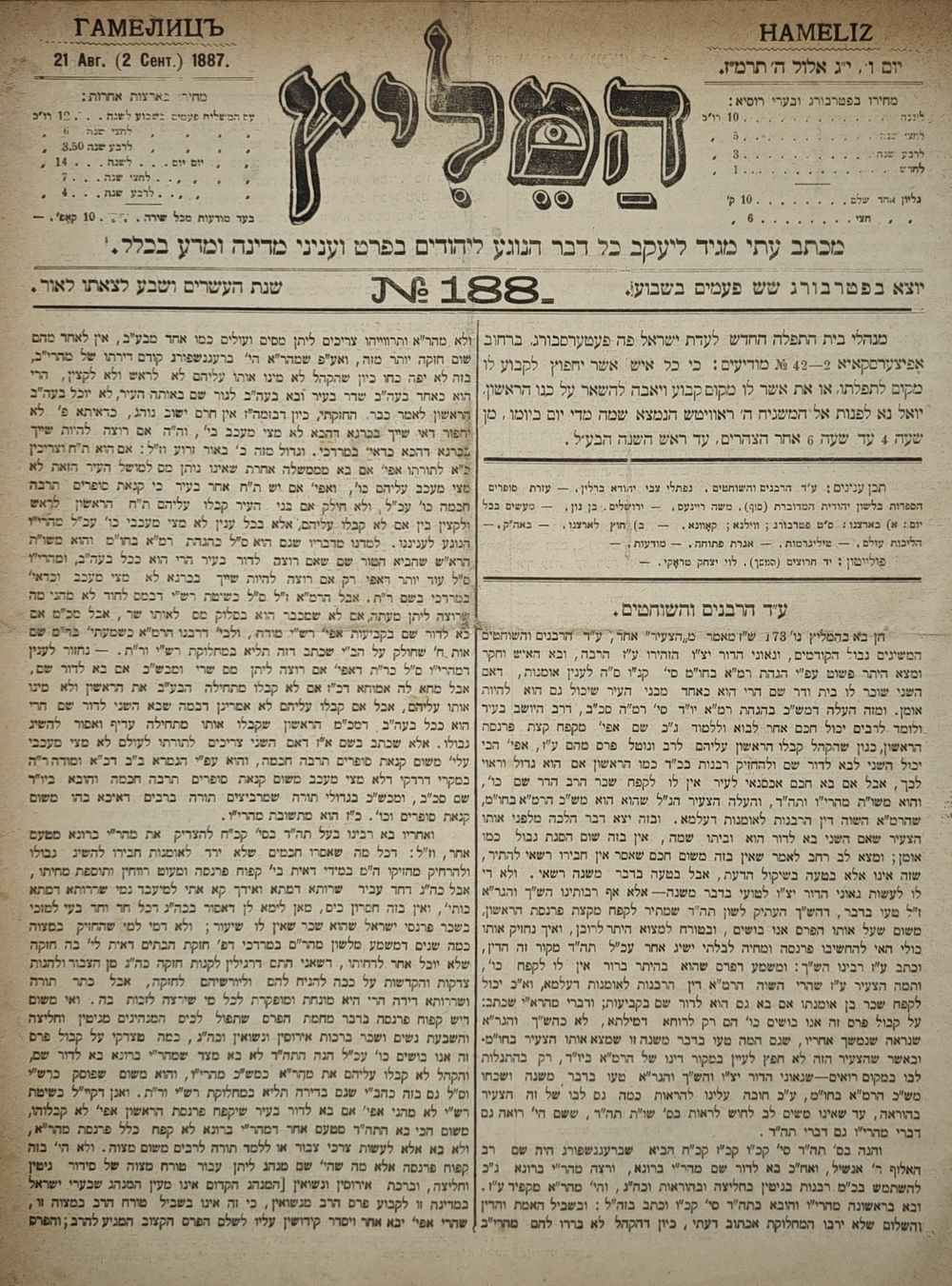
Trespassing dispute in slaughter and rabbinate - a halachic response published by the Netziv of Volozhin over the pages of the newspaper Hamelitz - to respond to a rabbi who called himself a 'youngster' who wrote against the opinion of the great rabbis who decreed that in all the Jewish communities of the world one should not eat meat slaughtered in this manner. Hamelitz, Av-Elul, 1887. Several issues of the newspaper HaMelitz, centering on a response by the Netziv of Volozhin who deemed it appropriate to send to the paper a halachic responsum as a rejoinder to a wide-ranging polemic then in progress concerning a shochet who had come to town and been appointed shochet without the consent of the city's rav, whose prohibition against eating his shchita was then being published by the great rabbis of the day. The Netziv advocates a ban on the grounds of trespassing, arguing his position in a lengthy halachic responsum against the detractors. In the present volume three issues are presented. 1. The response of the Netziv. 2. The issue in which the article appeared by the rabbi who called himself 'Young'. 3. Another response in favor of the Netziv's viewpoint by Rabbi Abraham Haim Sirat. פולמוס השגת גבול בשחיטה ורבנות - תשובה הלכתית שפרסם הנצי”ב מוואלוז'ין מעל גבי עיתון המליץ - להשיב כנגד רב שכינה עצמו 'צעיר' אשר כתב כנגד דעת גודלי ישראל שתיקנו שבכל תפוצות ישראל לאוסר אכילה משחיטה כזו. המליץ, אב-אלול, תרמ”ז | 1887 מספר גיליונות עיתון המליץ, במרכזם תשובה מאת הנצי”ב מוואלוז'ין אשר מצא לנכון לשלוח אל העיתון תשובה הלכתית כמאמר תגובה בנוגע לפולמוס רחב שהתנהל בימים ההם אודות שוחט שהגיע לעיר והתמנה לשוחט שלא ברשות רב העיר, שגדולי הדור פרסמו בזמן ההוא איסור לאכול משחיטתו משום השגת גבול. הנצי”ב מצדד לאוסר משום השגת גבול, תוך שהוא מנמק את שיטתו בתשובה הלכתית אורכה, כנגד המלעיזים. באסופה שלפנינו שלושה גיליונות 1. תשובת הנצי”ב 2. הגיליון בו פרסם את דבריו הרב שכינה עצמו 'צעיר' 3. תשובה נוספת המצדדת כדעת הנצי”ב מאת רבי אברהם חיים סיראט.