Bidspirit auction | Polemic over a conditional get
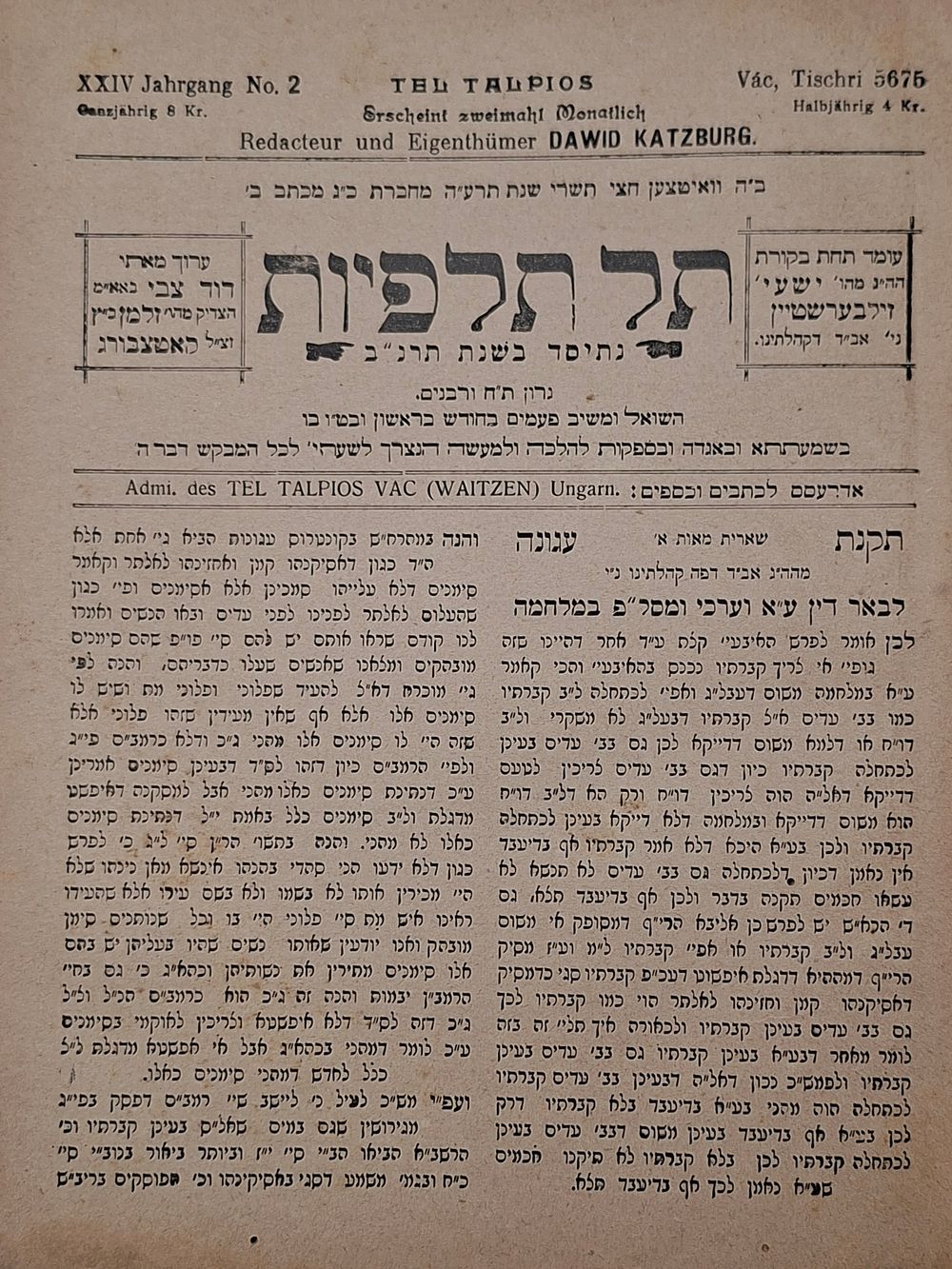
Polemic over a conditional get during the First World War: A special ”Kol Koreh” published by the Geonim of Hungary, Rabbi Koppel Reich and Rabbi Yeshaya Silberstein, to issue a get by proxy. The periodical ”Tel Talpiot” edited by Rabbi Yeshaya Silberstein and Rabbi David Tzvi Katzburg, issues from the year 1914-1915. Extensive discussion on severe halachic questions that arose in the wake of the World War raging during those days: the laws of Agunot, the polemic over the method to prevent Aginut, and unique and rare questions stemming from the state of emergency regarding the laws of Purim and Passover, the law of Mishloach Manot with forbidden foods, the law of the four cups with Stam Yeinam, and other severe questions. The polemic regarding the Agunot enactment and 'Get B'Shlichut': Printed in the issues is a special ”Kol Koreh” by Rabbi Koppel Reich, Av Beit Din of Budapest, and Rabbi Yeshaya Silberstein, Av Beit Din of Waitzen, featuring a special proposal to prevent Aginut via 'Get B'Shlichut' [divorce by proxy]. According to the proposal, soldiers departing to fight would deliver a letter of authorization, appointing proxies to issue a get on their behalf to their wives at any time and under any condition they desire. This was done so that in a case of doubt regarding their death, Heaven forbid, a get could be issued on their behalf based on the assumption that they are still alive. With this proposal, the rabbis sought to avoid the pitfalls that could arise from the 'conditional get' enactment instituted by the rabbis of Germany. This letter sparked a polemic and discussions, and following its initial publication, Rabbi Koppel and Rabbi Yeshaya published the letter again with modifications, having responded to comments sent to them by the leading Torah sages to amend the text of the authorization deed. The issues print the ”Kol Koreh” alongside the text that the husband must submit to the Beit Din to appoint them as proxies to issue a get on his behalf. Echoes of the events of the period, the editor's letter, and questions from the front: On the title page of the first issue, the editor's letter is printed under the heading ”The Entrance Gate: Let this be written for the last generation” - a painful letter regarding the fact that ”a great war has broken out in the world, goodness has ceased from the world, livelihood is destroyed, and commerce is closed, because the ships are not safe, and the railways are mostly occupied with transporting army personnel with weapons of war and their supplies”. He describes how ”troubles are approaching from all sides in general, and upon our brethren the children of Israel in particular”. Laws of forbidden foods and the laws of Purim in the war: A letter of inquiry by a Jew named R' Avraham Zeiger, who addresses the Jewish sages via the issue with questions regarding military personnel, who due to Pikuach Nefesh [saving a life] eat forbidden foods - do they recite a blessing over them? Do they fulfill the obligation of Mishloach Manot with forbidden foods? Is it proper for them to fast on Ta'anit Esther? Regarding a Kohen, a man of war who kills, what is his law regarding the Priestly Blessing? And if the soldiers do not have a Megillah, do they recite Hallel on Purim? Following his words appears a long and fascinating letter from the editor regarding eating forbidden foods in the war. Passover laws in the army: Fascinating questions regarding eating Matzah, the commandment of Bedikat Chametz [searching for leaven] for military personnel for the Chametz remaining in their homes, eating Chametz on Passover for physical survival, and the commandment of the four cups - is it possible to fulfill it with ”Stam Yeinam” [non-Jewish wine]. The questioner notes that he asked his teacher and rabbi, the righteous Gaon of the holy community of Kerestir (apparently Rabbi Moshe Singer), who ruled restrictively. An additional question regarding forbidden foods by Avraham Meir Fried, who also fought in the war. Extremely rare volume! Due to the events of the World War and the tribulations of the era, printed materials and issues published at the height of the war barely survived. 259 pages. Good- condition. Moth holes. Wear to the binding. Typical age-related flaws. --- פולמוס גט על תנאי בימי מלחמת העולם הראשונה: ”קול קורא” מיוחד שפרסמו גאוני הונגריה רבי קאפיל רייך ורבי ישעיה זילברשטיין לתת גט בשליחות כתב העת ”תל תלפיות” בעריכת רבי ישעיה זילברשטיין ורבי דוד צבי קצבורג, גיליונות שנת תרע”ה | 1914-1915 עיסוק נרחב בשאלות הלכתיות חמורות שהתעוררו בעקבות מלחמת העולם שהשתוללה באותם ימים: דיני עגונות, הפולמוס על הדרך להימנע מעגונות, ושאלות ייחודיות ונדירות הנובעות מהמצב החירום בענייני הלכות פורים ופסח, דין משלוח מנות במאכלות אסורות, ודין ד' כוסות בסתם יינם ושאלות חמורות נוספות. הפולמוס על תקנת העגונות ו'גט בשליחות': בגיליונות נדפס ”קול קורא” מיוחד מאת רבי קאפיל רייך אבד”ק בודפסט ורבי ישעיה זילברשטיין אבד”ק ווייטצען, ובו הצעה מיוחדת למנוע עגינות על ידי 'גט בשליחות'.